
December 29, 2025
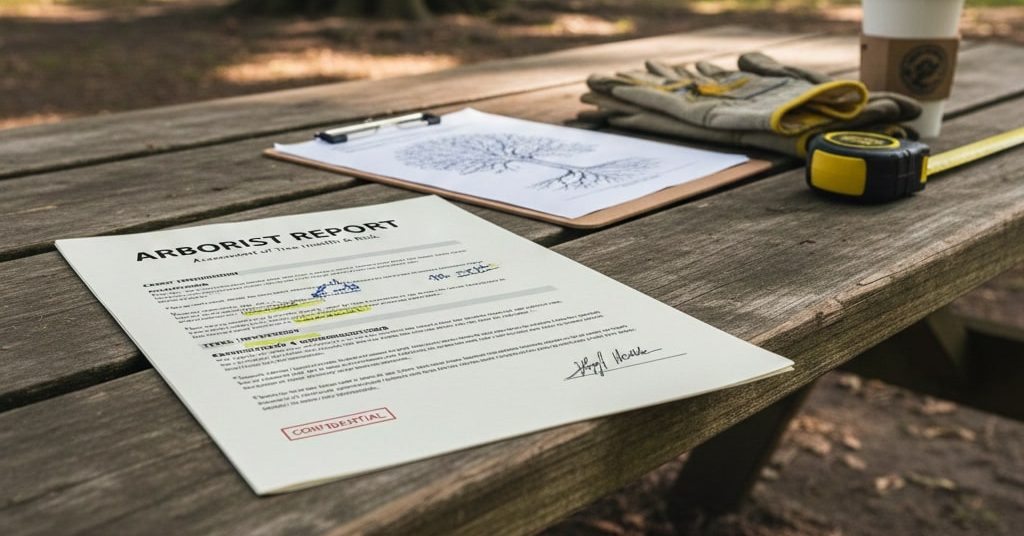
An arborist report is more than just a tree health assessment. It’s a technical document prepared by a certified arborist that details a tree’s condition, stability, species, and recommended actions. Whether you’re developing a property in Bellingham, removing a hazardous oak in Ferndale, or applying for a city permit, understanding the purpose and process of an arborist report is crucial.
Understanding What an Arborist Report Includes
An arborist report is an official, data-driven document that provides insight into a tree’s current health, its environmental role, and any potential risks it may pose. These reports are commonly required by city planning departments, insurance companies, or homeowners’ associations before any major pruning or removal.
Core Elements of an Arborist Report
- Tree Identification: The report begins with the tree’s species, size, and age. These details help assess the expected life span and natural growth characteristics.
- Site Assessment: The arborist notes the location, soil conditions, slope, drainage, and nearby structures. Whatcom County’s heavy rainfall and clay soils can impact root stability, making this analysis essential.
- Tree Health Evaluation: Visual and sometimes diagnostic testing determines whether the tree is thriving, stressed, or diseased. Indicators include leaf density, bark texture, root exposure, and signs of decay or pest activity.
- Structural Stability: The arborist evaluates whether the tree’s trunk, roots, or branches pose safety concerns. Leaning trunks, cracks, or dead limbs often require urgent attention.
- Risk Rating: Using the International Society of Arboriculture (ISA), Tree Risk Assessment Qualification (TRAQ) system, arborists assign a risk level—low, moderate, high, or extreme—based on the probability of failure and potential target impact.
- Recommendations: The report concludes with maintenance or removal recommendations. This might include pruning, bracing, root care, or complete removal if the tree cannot be stabilized.
- Photographic Documentation: High-quality images accompany findings to support permit applications and provide visual references for clients and officials.
When You Need an Arborist Report in Whatcom County
Understanding when to obtain an arborist report helps avoid project delays, penalties, or unsafe conditions.
Tree Removal Permits
Many Whatcom County municipalities, including Bellingham and Mount Vernon, require a certified arborist report for tree removal on residential or commercial properties. This ensures removals are justified and comply with local tree preservation ordinances.
Construction or Land Development
Before building a new structure or expanding an existing one, developers must identify and protect significant trees. An arborist report determines which trees can be preserved, which require protective measures, and which may be safely removed.
Storm Damage or Safety Concerns
After severe wind or ice events, arborist reports document the condition of damaged trees. This information helps insurance companies validate claims and supports decisions for emergency removal.
Property Sales or Insurance Requirements
When buying or selling property, especially those with mature or heritage trees, arborist reports provide clarity on tree health and potential future maintenance costs. Some insurance companies request reports before offering coverage on tree-dense properties.
Disputes Between Neighbors
Tree disputes—over roots, shade, or safety—can be resolved with an unbiased arborist report. The document provides factual data that clarifies ownership boundaries, health status, and responsibility.
How Arborists Evaluate Tree Health and Risk
Visual Inspections
Certified arborists begin with a thorough visual inspection. They look for signs of decay, cavities, and stress fractures. In Whatcom County’s damp climate, fungal decay and root rot are prevalent issues.
Diagnostic Tools
Advanced methods, such as resistance drilling, sonic tomography, or aerial inspections, may be used to detect internal decay or structural weaknesses not visible externally.
Root and Soil Analysis
Tree stability starts underground. Arborists examine root flare exposure, compaction levels, and drainage efficiency. Poor aeration or construction damage can severely affect long-term tree viability.
Risk Assessment Techniques
The arborist calculates the likelihood of failure and potential target damage. For instance, a leaning maple over a pedestrian walkway in Bellingham might score higher risk than one in an open field in Lynden.
The Importance of Arborist Reports in Local Regulations
Municipalities in Whatcom County prioritize tree conservation. City codes often require arborist reports to ensure that healthy, significant, or native species are preserved whenever possible.
Common Scenarios That Trigger Permit Requirements
- Removing a tree with a trunk diameter over 8–12 inches (depending on city code)
- Working within environmentally sensitive areas (like wetlands or slopes)
- Conducting construction near root zones
- Altering tree protection zones during development
Submitting a detailed arborist report ensures compliance, expedites permit approval, and demonstrates environmental responsibility.
Who Can Prepare an Arborist Report?
Not every landscaper or contractor can issue an official arborist report. Only professionals certified by the International Society of Arboriculture (ISA) or a comparable recognized body can produce documents accepted by local authorities.
Qualifications to Look For
- ISA Certified Arborist credential
- Tree Risk Assessment Qualification (TRAQ)
- Experience with local ecosystems and native species
- Understanding of regional regulations and soil conditions
In Whatcom County, hiring a local ISA-certified arborist familiar with Pacific Northwest weather patterns ensures accurate assessments and credible reporting.
Benefits of Obtaining an Arborist Report
- Legal and Permit Compliance: An official report satisfies municipal permit requirements and prevents fines for unauthorized removal
- Early Problem Detection: Reports often uncover root decay, fungal growth, or internal damage before they become critical safety hazards.
- Objective Documentation: Arborist reports provide unbiased, factual information useful for insurance, property valuation, or neighborhood mediation.
- Preservation of Valuable Trees: Instead of unnecessary removals, reports often recommend treatments that restore tree health and maintain ecological balance.
- Property Value and Safety: Healthy, well-documented trees add curb appeal and reduce liability for falling branches or unstable roots.
The Process of Getting an Arborist Report
Step 1: Site Visit and Inspection
The arborist conducts a thorough site walk to identify species, measure trunk diameter, and assess proximity to structures or utilities.
Step 2: Data Collection and Analysis
Measurements, photos, and observations are compiled. If needed, diagnostic testing is performed to confirm internal health or root stability.
Step 3: Report Preparation
Findings are organized into a formal document that includes diagrams, photographs, and recommendations. This process ensures all data meets municipal and insurance standards.
Step 4: Review and Submission
Homeowners or contractors submit the completed report with permit applications. The arborist may also coordinate with local planning departments to clarify findings.
Costs and Timelines for Arborist Reports
Average Cost in Whatcom County
For most residential assessments, arborist reports cost between $200 and $800 per tree, depending on tree size, site complexity, and number of trees. More complex projects or development assessments can exceed $1,500.
Report Turnaround Time
Simple reports may be completed within 3–5 business days, while larger property or multi-tree projects may take 1–2 weeks. Emergency reports after storm damage can often be expedited.
Preventive Benefits Beyond Permits
Even when not legally required, arborist reports play a proactive role in tree management.
- Long-Term Health Planning: Regular assessments help identify early signs of disease or nutrient deficiency, allowing timely intervention before removal becomes necessary.
- Improved Landscape Management: Property managers use reports to plan future plantings, ensuring species diversity and proper spacing to avoid overcrowding.
- Environmental Stewardship: In an eco-conscious region like Whatcom County, arborist reports promote sustainability by reducing unnecessary removals and supporting healthy urban canopies.
How Arborist Reports Support Storm Preparedness
Heavy rainfall, coastal winds, and saturated soils make Whatcom County prone to storm-related tree failures. Preemptive arborist assessments identify at-risk trees before major weather events.
Key Preventive Steps
- Thinning dense canopies to reduce wind resistance
- Inspecting root systems for soil instability
- Pruning deadwood to prevent breakage
- Cabling and bracing weak branches
Having documentation before a storm also strengthens insurance claims if property damage occurs later.
Common Misconceptions About Arborist Reports
“I Only Need a Report if I’m Removing a Tree.”
In reality, arborist reports support many aspects of tree care, including health management, construction planning, and insurance documentation.
“Any Landscaper Can Write a Report.”
Only certified arborists with professional credentials and liability coverage can produce recognized reports.
“Arborist Reports Always Recommend Removal.”
Most reports aim to preserve trees whenever possible, offering solutions like pruning, soil aeration, or disease treatment before recommending removal.