
May 15, 2026
Key Takeaways:
- Safety First: Never attempt to trim branches within 10 feet of a power line yourself
- Fire and Outage Risks: Limbs touching lines cause arcing, which leads to fires and localized blackouts
- Specialized Certification: Only Electrical Line Clearance Certified arborists should work near high voltage utilities
- Property Owner Responsibility: Understand the difference between service drops and main utility lines
- Proactive Maintenance: Regular pruning prevents emergency failures during Skagit high wind events
The lush green canopy of Skagit County, Washington State, is one of the greatest treasures in our region. From the towering Douglas firs in Sedro Woolley to the ornamental maples in Mount Vernon and Anacortes, trees provide shade and beauty as well as ecological balance. However, when the natural growth of these trees intersects with our electrical infrastructure, a scenic landscape can quickly turn into a high-stakes safety hazard.
Managing tree branches near power lines is one of the most dangerous aspects of property maintenance. In Skagit County, where heavy rains and seasonal windstorms are common, the risk of arcing or electricity jumping from a wire to a branch or a full limb failure taking down the grid is a constant reality. If you have noticed branches creeping toward the lines on your property, understanding the proper protocol is essential for your safety and the reliability of our community’s power.
The Unique Environment of Skagit County
Skagit County presents a unique set of challenges when it comes to the intersection of nature and infrastructure. Our geography stretches from the saltwater shores of Anacortes to the dense forests of the North Cascades. Between these points lie thousands of miles of overhead power lines that weave through residential neighborhoods and commercial districts as well as vast agricultural lands. The trees here grow tall and fast thanks to our nutrient-rich soil and abundant rainfall. While this growth is a hallmark of the Pacific Northwest, it creates a persistent maintenance cycle for anyone with trees near utility easements.
The climate here also plays a major role. We experience high moisture levels for a significant portion of the year. Wet wood is an incredibly efficient conductor of electricity. In drier climates, a branch might brush against a wire with less immediate risk, but in the damp environment of Burlington, WA, that same contact is far more likely to result in an immediate electrical discharge. This makes proactive monitoring a necessity for every property owner in the valley.
The Dangers of Electrical Line Interference
Electricity is always looking for the shortest path to the ground. Because trees contain moisture and minerals, they act as excellent conductors. When a branch grows too close to a high-voltage line, several dangerous scenarios can unfold.
1 Fire Hazards
If a branch makes contact with a power line, it can create a spark that ignites the tree or the surrounding brush. This is particularly dangerous in late summer when the vegetation is dry. In the more rural areas of Skagit, a single spark from a power line contact can spark a fast-moving brush fire. These fires can be difficult to extinguish because the energized line may still be active, which prevents fire crews from approaching until the utility company arrives to cut the power.
2 Electrical Arcing and Grounding
Electricity does not actually need direct contact to be dangerous. Under the right conditions, high voltage current can arc or jump across several feet of air to reach a nearby branch. If a person is touching that tree or even standing near the base when an arc occurs, the results can be fatal. This phenomenon often occurs during storms when the air is humid, and the wind is pushing branches into the strike zone of the utility lines.
3 Power Outages and Equipment Damage
Limbs leaning on lines put physical stress on utility poles and transformers. During a windstorm, these weighted lines are much more likely to snap, causing widespread outages. Furthermore, the surges caused by branch contact can fry sensitive household electronics and municipal infrastructure. A single tree limb in a backyard in Sedro Woolley can potentially knock out power for an entire block or damage expensive transformers that take days to replace.
Identifying Your Lines: Who is Responsible
One of the most common questions Skagit homeowners ask is whether they are responsible for trimming this or if the utility company handles it. The answer depends entirely on the type of line and where it sits in the network.
Transmission and Distribution Lines
These are the high-voltage lines that run along the main roads and between neighborhoods. They are the backbone of the grid. Typically, the utility company, such as Puget Sound Energy, maintains a right-of-way and handles the pruning for these lines to ensure grid stability. They often use a cycle of every few years to clear these paths. However, if a tree on your private property is leaning dangerously toward these lines, you should still alert the utility company or a certified arborist to evaluate the risk.
Service Drops
This is the line that runs from the utility pole directly to your house or business. It is the final leg of the journey for the electricity that powers your lights and appliances. In most jurisdictions within Skagit County, the homeowner is responsible for maintaining the trees around this secondary line. However, because this line still carries significant voltage, it is still far too dangerous for a DIY approach. Just because it is your line does not mean it is safe to handle without specialized training.
Why You Must Hire a Certified Professional
Trimming a tree near a power line is not a standard landscaping task. It requires a specific credential known as Electrical Line Clearance Certification. Standard tree trimmers, while skilled in pruning, may not have the training or the specialized non-conductive tools required to work in the High Voltage Proximity Zone.
Specialized Tools and Equipment
Professional crews use fiberglass poles and insulated buckets that are tested regularly for their dielectric strength. This means they are designed to block the flow of electricity. A standard wooden or metal ladder used by a homeowner can easily become a path for a lethal current. Even a rope that is damp or dirty can conduct electricity. Professional arborists also use specialized rigging techniques to ensure that cut limbs fall away from the wires rather than onto them.
Training and Risk Assessment
An ISA Certified Arborist is specifically trained to handle these high-risk environments. They understand the Minimum Approach Distances mandated by OSHA and industry safety standards. We can look at a tree and determine its fall zone and how the wind will likely move its canopy during a Skagit storm. Attempting to trim these branches yourself with a metal ladder or a standard chainsaw is a life-threatening mistake that can be avoided with a single phone call.
Signs You Need Immediate Intervention
Waiting for a storm to hit before addressing overhanging limbs is a recipe for disaster. You should regularly walk your property and look up. Most people focus on the ground or the trunk of the tree, but the real danger is often overhead. Keep an eye out for these warning signs on your Skagit property.
Visible Sparking or Smoke
If you see blue light or smoke where a branch meets a wire, call for emergency services immediately. This is a sign of active arcing. Do not approach the tree, and keep children and pets away from the area. The ground around the tree could potentially be energized.
The 10 Foot Rule
If any part of your tree is within 10 feet of a power line, it is time to schedule a professional consultation. This is the standard safety buffer. As branches grow, they will eventually enter the zone where the risk of arcing increases significantly.
Burn Marks on Leaves and Branches
Blackened or seared foliage at the tips of branches often indicates that electricity has already been arcing to the tree. Sometimes you might see a V shape burned into the canopy where the line has made contact during a wind event. This is a clear indicator that the tree is a fire hazard.
Loud Hum or Buzzing
If the area near the tree and the lines is making a low-frequency buzzing sound, the air is likely becoming ionized. This often happens in foggy or misty Skagit weather and indicates a high risk of an imminent arc. It is a warning from the environment that the electrical field is unstable.
The Correct Way to Prune Near Utilities
It is important to follow modern arboricultural standards to ensure the tree remains healthy while the lines remain clear.
Directional Pruning
A professional arborist uses a method called Directional Pruning. Instead of topping the tree, which only encourages faster and weaker regrowth toward the lines, they will prune branches back to a parent limb or the trunk. This encourages the tree to grow away from the power lines. Topping a tree is a common mistake made by uncertified workers because it provides a temporary fix but actually makes the tree more dangerous and unsightly in the long run.
Structural Integrity
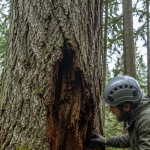
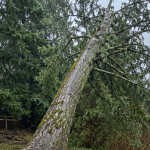
A professional arborist will also look at the overall health of the tree. If a tree near power lines is dying or has significant root rot, pruning may not be enough. In those cases, they may recommend a full removal to prevent the entire structure from crashing into the utility infrastructure. The goal is always to find the balance between preserving our local canopy and ensuring public safety.
Commercial and HOA Considerations
In Skagit County, many commercial properties and Homeowners Associations have extensive tree assets near power lines. These organizations have a legal and financial responsibility to maintain safe grounds. A fallen tree that damages utility lines on a commercial site can lead to massive liability claims and business interruptions.
Earthworks Tree Service works closely with property managers to create long-term vegetation management plans. By scheduling regular inspections and pruning, we help these organizations avoid the high costs of emergency repairs and the risks of litigation. Our team can provide the documentation and reporting needed for insurance and municipal compliance. Our emergency response team is available 24/7 because we know that these situations happen at the worst possible times. We have the equipment to handle nighttime removals and difficult rigging scenarios. Earthworks Tree Service works in coordination with local utilities to ensure that lines are de-energized before we begin our work, which provides a safe environment for our crew and your property.
Navigating the dangers of electrical line interference requires more than just a saw because it requires specialized expertise and a commitment to safety. Earthworks Tree Service is your trusted local expert for managing trees near power lines across Skagit and Whatcom Counties. Our team consists of ISA Certified Arborists who hold the necessary certifications to work safely around electrical infrastructure. Call us today at (360) 994-1211.
Frequently Asked Questions by Homeowners in Skagit, Washington State
What services does Earthworks Tree Services offer in Skagit, WA?
Our team provides everything from standard pruning and removals to stump grinding and specialized electrical line clearance. We also handle 24/7 emergency calls and arborist consultations for permits and reporting.
How do I know if a tree needs to be removed?
You should look for signs of structural failure, like deep cracks or mushroom growth at the base or a sudden lean. If a tree is too close to power lines and cannot be safely pruned it may need to be removed to prevent a fire or outage.
Is tree pruning necessary, and how often should it be done in Skagit, WA?
Yes, regular pruning maintains health and safety. Most trees benefit from a professional check every two to three years. For trees near power lines, more frequent monitoring is recommended to stay ahead of growth.
What should I do in case of a tree emergency, such as storm damage?
First, stay away from any downed lines or leaning trees. Treat every line as if it were live and dangerous. Call our emergency response team at (360) 994-1211, and we will send a crew to secure the area immediately.
Do you offer any guarantees or warranties for your tree services in Skagit, WA?
We pride ourselves on professional excellence and customer satisfaction. As a licensed and bonded company, we ensure all work meets ISA standards for safety and quality, and we stand behind the expertise of our certified arborists.
Can I use a wooden ladder to trim branches near power lines?
No, because even though wood is less conductive than metal, it can still conduct high-voltage electricity if it is damp or contains moisture or dirt. Never use any type of ladder near power lines.
What is arcing?
Arcing is when electricity jumps through the air from a high voltage source, like a wire, to a conductor, like a tree limb or a person. This can happen without direct contact and is a major cause of fires and injuries.
Is financing available for large tree removals near lines in Skagit, WA?
Yes, Earthworks Tree Service offers financing options to help homeowners manage the costs of critical safety work. We believe safety should be affordable for everyone in our community.
Summary Checklist Tree and Power Line Safety
| Condition | Risk Level | Recommended Action |
|---|---|---|
| Branches touching the wire | Critical | Evacuate the area immediately and contact emergency utility services |
| Limbs within 10 feet of the line | High | Arrange certified line-clearance pruning by qualified professionals |
| Deadwood overhanging the line | High | Remove hazardous limbs before weather or failure creates an emergency |
| Tree leaning toward utility pole | Moderate | Assess structural stability for support systems or removal if risk increases |
| New growth near the service drop | Low to Moderate | Use preventive pruning to guide growth safely away from utility lines |
Final Advice
When you are dealing with tree branches near power lines in Skagit, the only safe strategy is one of extreme caution and professional intervention. Many homeowners underestimate how easily electricity can travel through a grounded tree, which leads to tragic accidents that are entirely preventable. Your best course of action is to perform a visual inspection from the ground, and if you see any foliage within a ten-foot radius of a wire, you should consider it a high-priority task. Never attempt to use long-handled pruners or ladders near these lines yourself because even non-metallic tools can hold enough moisture to conduct a lethal current. Instead, you should rely on the specialized equipment and rigorous safety training of an Electrical Line Clearance Certified arborist. Managing these limbs during calm weather is far safer and more cost-effective than dealing with a midnight emergency during a Skagit windstorm. Proactive clearing ensures that your property remains safe and your neighborhood’s power stays on even when the Northwest weather turns severe