
May 14, 2026
Key Takeaways:
- Identify Hazard Trees: Look for dead limbs, trunk cracks, and root rot before storm season begins.
- Utilize Wind Sail Pruning: Thinning the canopy allows wind to pass through rather than pushing the tree over.
- Structural Support: Cabling and bracing can save high-value trees with minor structural defects.
- Root Zone Protection: Healthy soil and undisturbed root systems are the foundation of wind resistance.
- Professional Assessment: Regular inspections by ISA-certified arborists prevent emergency removals.
Living in Skagit County, WA, means embracing the breathtaking beauty of the Pacific Northwest, from the fertile flats of the valley to the rugged foothills of the Cascades. However, it also means facing the annual reality of windstorm season. As autumn transitions into winter, the Pineapple Express and powerful coastal gusts can put immense pressure on our local landscape. In areas like Mount Vernon, Anacortes, and Sedro-Woolley, trees are a defining feature of our properties, but without proper preparation, they can become significant liabilities.
Preparing your trees for high-wind events is not just about aesthetics; it is a critical component of property maintenance and safety. A single fallen limb can cause thousands of dollars in damage to roofing, siding, or vehicles, and a full-scale tree failure can be catastrophic. By taking proactive steps now, you can improve the resilience of your trees and ensure your landscape remains an asset rather than a hazard.
Understanding the Dynamics of Wind and Trees
To prepare effectively, it is helpful to understand why trees fail during Skagit windstorms. Trees are biological structures that have evolved to withstand natural forces, but human interventions, such as construction, clearing, or poor pruning, often compromise their natural defenses.
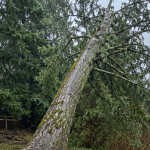
When high winds hit a dense evergreen canopy, the tree acts like a giant sail. If the wind cannot pass through the branches, the force is transferred down the trunk to the root system. In Skagit’s wet winters, the soil often becomes saturated. This liquid soil provides less grip for the roots, making uprooting much more likely. Additionally, internal decay, which may not be visible to the untrained eye, can weaken the wood fibers, leading to trunk snaps or limb drops.
Step 1: Conduct a Pre-Season Visual Inspection
The first step in preparation is a thorough walkthrough of your property. You don’t need to be an expert to spot the most glaring red flags. Walk around each major tree and look for the following:
Canopy Health
Look for deadwood branches that have no leaves or needles and appear brittle. During a storm, these are the first to fly. Also, pay attention to hangers, which are branches that have already broken but are caught in the upper canopy.
Trunk Integrity
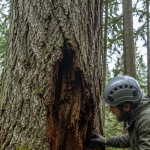
Check the trunk for deep, vertical cracks or included bark (where two stems grow so close together that bark is trapped between them, creating a weak attachment). Look for signs of fungal growth, such as conks or mushrooms at the base, which often indicate internal rot.
Root Zone Stability
Examine the ground around the base of the tree. If you see heaving (the soil lifting on one side) or fresh cracks in the earth, the tree may already be leaning or losing its anchor. Be especially wary of trees near recent construction, where roots may have been severed.
Step 2: Implement Wind Sail Pruning
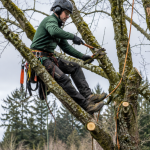
One of the most effective ways to protect large evergreens, such as Western Red Cedars or Douglas Firs, is wind sail pruning. This technique involves selectively thinning the branches in the outer portions of the canopy.
By removing a specific percentage of the foliage, an arborist reduces the sail area of the tree. This allows wind to move through the tree rather than against it. When done correctly, this reduces the torque on the trunk and the tension on the roots. It is vital that this be done by a professional; topping a tree or over-thinning can make it more dangerous by shifting its center of gravity or causing it to produce weak, rapid regrowth.
Step 3: Structural Support through Cabling and Bracing
Not every tree with a structural flaw needs to be removed. In many cases, high-value or sentimental trees can be reinforced. Cabling involves installing high-strength steel cables between major limbs to limit their movement during a storm. This tethers the limbs together, so they support one another rather than pulling apart.
Bracing uses threaded rods installed through the trunk or heavy limbs to provide rigid support for split crotches. These systems are invisible from the ground but provide the mechanical advantage necessary to survive 60-mph gusts.
Step 4: Soil and Root Management
The strength of a tree is entirely dependent on what is happening underground. In the Skagit Valley, heavy rains often precede windstorms. To help your trees stay anchored:
- Avoid Compaction: Do not park vehicles or heavy equipment under the drip line of the tree. Compacted soil lacks the oxygen and pore space necessary for healthy root growth.
- Mulching: Applying a layer of organic mulch around the base of the tree (keeping it away from the actual trunk) helps regulate moisture and encourages a robust, fibrous root system.
- Drainage: Ensure that your property’s drainage doesn’t cause water to pool at the base of large trees, as prolonged saturation weakens the soil-root bond.
Step 5: The Role of the ISA-Certified Arborist
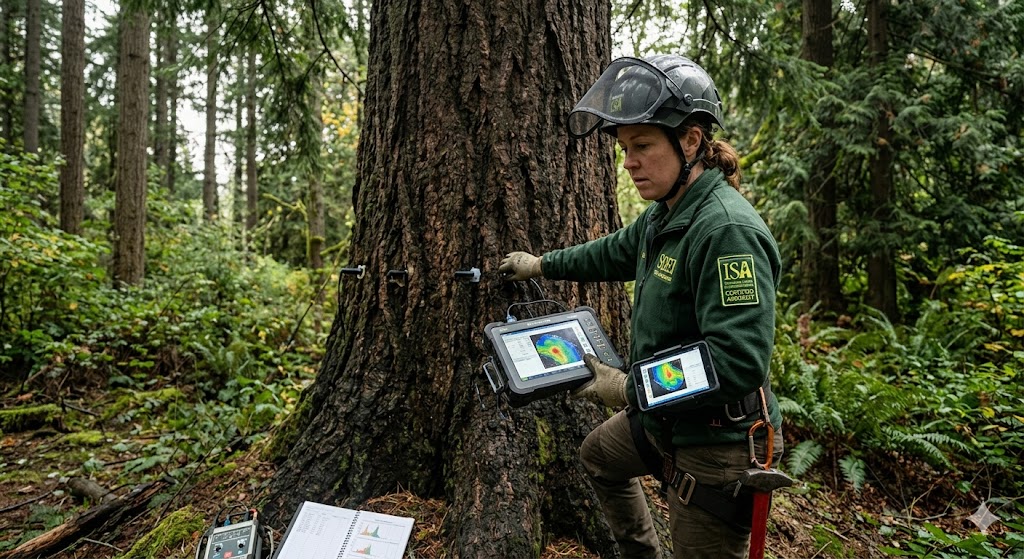
While DIY maintenance is fine for small ornamental trees, large-scale storm preparation requires the expertise of an ISA-Certified Arborist. These professionals are trained in the physics of tree failure and the biology of Northwest species.
A professional assessment in Mount Vernon or Burlington, WA, involves looking for subtle signs of stress that a homeowner might miss. They can perform a Level 2 basic assessment, which may include sounding the trunk with a mallet to detect hollows or using a resistograph to measure wood density. Getting this report before the wind picks up is the best insurance policy for your home.
Emergency Readiness
Even with the best preparation, nature is unpredictable. Part of your preparation should include having an emergency plan. Identify which trees on your property are targets, meaning if they fell, they would hit your house, the power lines, or the neighbor’s property.
Keep the contact information for a 24/7 emergency tree service handy. If a tree does fail during a storm, never attempt to clear it yourself if it is near power lines or under tension. These situations are life-threatening and require specialized rigging and electrical line clearance certification.
When the winds howl through Skagit County, you need a partner you can trust to protect your home and landscape. Earthworks Tree Service specializes in proactive storm preparation and rapid emergency response. Our team of ISA-Certified Arborists has 25 years of experience handling the unique challenges of Northwest Washington’s climate. Whether you need precision tree pruning in Mount Vernon or a hazardous tree removed in Anacortes, we provide licensed, bonded, and insured expertise. Contact our team at (360) 994-1211. We are open 24/7 for emergencies and offer flexible financing to ensure your safety never has to wait.
Frequently Asked Questions by Homeowners in Skagit, Washington State
How can I tell if my tree is a hazard before a storm in Skagit, WA?
Look for leaning trunks, large dead branches, and fungus growing near the base. If the ground is heaving or you see deep cracks in the trunk, it is a high-priority hazard.
Is topping a good way to prevent wind damage?
No. Topping creates weak points and causes the tree to grow suckers that break easily. It often leads to internal rot and makes the tree more dangerous over time.
What is wind sail pruning in Skagit, WA??
It is the selective thinning of a tree’s canopy to allow wind to pass through more easily, reducing the physical load on the trunk and roots.
Can a leaning tree be saved?
It depends on whether the lean is natural (the tree grew that way to find light) or recent (the roots are failing). An arborist can determine if cabling or bracing can stabilize it.
Are evergreens more likely to fall than deciduous trees in winter?
Yes, because evergreens keep their needles, they catch the wind like a full sail, whereas deciduous trees without leaves allow more wind to pass through.
How often should I have my trees inspected in Skagit, WA??
We recommend a professional inspection every 2–3 years, or immediately after a major weather event.
Does insurance cover tree removal after a storm?
Usually, insurance covers removal if the tree falls on a covered structure, such as your house or fence. Proactive removal of a standing tree is rarely covered, but it is much cheaper than a deductible.
What should I do if a branch is touching power lines?
Never touch it. Contact a service with Electrical Line Clearance Certification, like Earthworks Tree Service, to handle the situation safely.
Summary Checklist: Skagit Windstorm Prep
| Condition | Risk Level | Recommended Action |
|---|---|---|
| Dead or Hanging Limbs | Moderate | Remove hazardous limbs before high winds increase failure risk |
| Tight “V” Shaped Crotches | High | Evaluate for structural support such as cabling, bracing, or corrective pruning |
| Soil Heaving at Base | Critical | Arrange for an immediate professional assessment due to potential root failure |
| Overly Dense Canopy | Moderate | Schedule strategic canopy thinning to reduce wind resistance and branch stress |
| Decaying Trunk Cavities | High | Request a professional structural evaluation to assess internal decay and stability |
Final Advice
Preparing your property for Skagit County’s windstorm season is a race against the clock that should ideally begin long before the first gusts arrive. The most critical step is acknowledging that large evergreens like our local Douglas firs and Western Red Cedars undergo immense physiological stress when the ground is saturated and the winds are high. To safeguard your home, prioritize wind sail pruning to reduce canopy resistance and ensure that any multi-stemmed trees are structurally reinforced with professional cabling. It is also wise to maintain a clear safety zone by removing brittle deadwood that can become dangerous projectiles in a storm. Most importantly, never underestimate the complexity of tree physics; what looks like a minor trunk crack could be a sign of catastrophic internal decay.
Taking these proactive measures doesn’t just protect your roof and power lines; it preserves the long-term health and value of the majestic trees that define the Skagit landscape. If you notice any of these warning signs, do not wait for a storm to force the issue. A professional assessment from an arborist can determine if the tree can be saved through specialized care or if it must be removed to protect your property.