
August 27, 2026
Key Takeaways
- Timing pruning around a tree’s natural growth cycle reduces stress, limits disease exposure, and supports faster wound closure.
- Bigleaf maple is best pruned during late fall through winter dormancy, when sap flow is minimal and wounds are less likely to attract pests.
- Western red cedar tolerates pruning across a wider window but benefits most from late winter work before new spring growth begins.
- Douglas fir and other conifers are generally pruned in late winter or early spring, avoiding active growth and storm-heavy months.
- Earthworks Tree Service’s ISA-certified arborists tailor pruning schedules to each species and property, factoring in Bellingham’s specific rainfall and storm patterns.
Pruning at the wrong time of year doesn’t just look a little off; it can genuinely stress a tree, slow its ability to heal, and in some cases open the door to pests or disease that a well-timed cut could have avoided.
In Bellingham and the surrounding Whatcom County area, where bigleaf maple, western red cedar, and Douglas fir make up a large share of both the native landscape and residential yards, getting pruning timing right means working with the region’s specific climate rhythms rather than a generic, one-size-fits-all calendar.
Here’s how timing actually plays out for these three common species in a Pacific Northwest climate, and why the right season depends on more than just convenience.
Why Pruning Timing Matters More Than Most People Realize
Every tree has a natural cycle of dormancy and active growth, and pruning during the wrong part of that cycle can work against the tree rather than with it. Prune during a period of active sap flow, for instance, and a tree can “bleed” excessively from fresh cuts, wasting energy and leaving wounds open longer than necessary. Prune right as pests or disease pathogens are most active, and freshly cut wood becomes an easy entry point at the worst possible time.
In Bellingham’s climate specifically, the region’s long, wet fall and winter season combined with a relatively short, mild summer growing window narrows the ideal pruning periods more than a drier or more seasonally extreme climate would. Getting the timing right here isn’t just about tradition; it’s about working around genuine local risk factors like fungal pathogens that thrive in wet conditions and storm systems that can stress recently pruned trees.
Bigleaf Maple: Late Fall Through Winter Dormancy
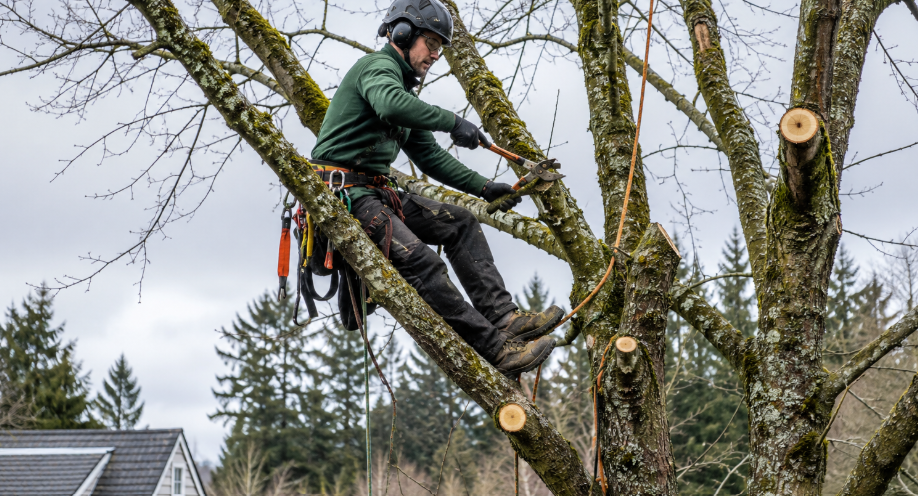
Bigleaf maple, one of the most common deciduous trees across Whatcom County, is best pruned once the tree has fully entered dormancy, typically from late fall through the winter months before new buds begin to swell in early spring. During this window, sap flow is at its lowest, which means pruning cuts won’t bleed heavily and the tree isn’t diverting energy toward the wound at the expense of active growth.
Pruning maple during the growing season, particularly in spring when sap is rising fastest, can lead to excessive sap loss from cuts and create a longer exposure window for fungal pathogens that are more active during the region’s wetter months. Waiting until the tree has dropped its leaves also makes it much easier to see the tree’s actual branch structure. Crossing branches, weak unions, and deadwood are far more visible without a full canopy in the way, which can lead to better pruning decisions overall.
Western Red Cedar: Flexible, But Late Winter Is Ideal
Western red cedar is a bit more forgiving on timing than bigleaf maple because it doesn’t go through the same dramatic dormancy cycle as a deciduous tree. That said, late winter, generally February into early March before new spring growth begins, tends to be the ideal window for most cedar pruning work in Bellingham’s climate. Pruning during this period allows cuts to begin healing as the tree enters its most active growth phase, reducing the amount of time the tree is carrying an open cut. It’s also worth avoiding heavy pruning during the peak of the region’s wet season in late fall and early winter, since prolonged moisture around fresh cuts can increase the risk of fungal issues before the wound has a chance to seal.
Light maintenance pruning, such as removing small deadwood or minor storm damage, can generally be done on cedar throughout the year without much added risk. Larger structural pruning, however, benefits from sticking to the late-winter window.
Douglas Fir and Other Conifers: Late Winter to Early Spring
Douglas fir, along with other common regional conifers, generally does best with pruning scheduled for late winter to early spring, similar to cedar, but with a bit more sensitivity to summer heat stress and pest activity. Pruning before new growth begins in spring allows the tree to direct its energy toward healing and new growth simultaneously, rather than pruning during summer when the tree is already managing heat and moisture stress. It’s also worth avoiding major fir pruning during the region’s peak storm season in late fall and early winter.
A tree that’s just had significant limb removal is naturally somewhat destabilized until new growth patterns re-establish balance in the canopy. Pruning right before Bellingham’s heaviest wind and rain events can leave a tree less prepared to handle that stress.
When Timing Rules Can Bend
There’s an important exception to all of this: safety-driven pruning doesn’t wait for the ideal season. A damaged, cracked, or hazardous limb that poses an immediate risk to a home, vehicle, or person should be addressed right away, regardless of what time of year it happens to be. The seasonal guidelines above are about optimizing long-term tree health for routine maintenance and structural pruning, not about leaving a genuine hazard in place until a more convenient month arrives.
Earthworks Tree Service helps Bellingham homeowners maintain healthy maple, cedar, and fir trees with species-specific pruning. Our ISA-Certified Arborists assess each tree’s health, age, location, and local conditions before recommending the right approach. We provide crown reduction, wind sail pruning, and roof clearance to improve structure and reduce storm risks. Serving Whatcom and Skagit Counties, we use professional techniques while preserving each tree’s natural shape.
Frequently Asked Questions About Best Time to Prune Maple, Cedar, and Fir Trees in Bellingham
Can I prune my maple tree in the summer if I missed the winter window?
Light, minor pruning is generally fine, but larger structural cuts are best saved for the next dormant season to avoid excessive sap loss and reduce disease exposure during the tree’s active growth period.
Why does cedar tolerate a wider pruning window than maple?
Cedar is an evergreen conifer without the same dramatic seasonal dormancy cycle as a deciduous tree like maple. It therefore experiences less dramatic sap flow changes across the year, though late winter still offers favorable healing conditions.
Is it ever too late in the season to prune a fir tree?
Pruning during the height of summer heat or during the peak of fall storm season isn’t ideal, but it isn’t necessarily harmful for minor work. For significant structural pruning, late winter to early spring remains the preferred window.
Does storm damage pruning need to follow the same seasonal rules?
No. Damaged or hazardous limbs should be addressed as soon as it’s safe to do so, regardless of season. The immediate safety risk outweighs the benefits of waiting for ideal pruning timing.
How often should mature trees be pruned on a regular schedule?
This varies by species and the tree’s condition, but many established residential trees benefit from maintenance pruning every two to three years, with more frequent light maintenance for trees near structures or power lines.
Summary Checklist: When to Prune Common Bellingham Trees
| Species | Ideal Pruning Window | What to Avoid |
| Bigleaf Maple | Late fall through winter dormancy | Spring pruning during peak sap flow |
| Western Red Cedar | Late winter before spring growth | Heavy pruning during peak wet season |
| Douglas Fir | Late winter to early spring | Pruning during summer heat or fall storm season |
| Any species with hazardous damage | Immediately, regardless of season | Waiting for the “ideal” window when safety is at risk |
| Newly planted or young trees | Light shaping in the tree’s early dormant seasons | Heavy structural pruning before establishment |
Final Advice
Pruning timing isn’t just a scheduling preference; it’s a real factor in how well a tree heals, how much disease and pest exposure it faces, and how much stress it carries into Bellingham’s storm season. Matching pruning work to each species’ natural growth cycle, rather than pruning on a generic calendar, gives maple, cedar, and fir trees the best chance to recover quickly and stay structurally sound through the region’s wet winters.
Earthworks Tree Service has provided expert pruning and trimming across Bellingham, Mount Vernon, and the surrounding Whatcom and Skagit County communities for 25 years, with ISA-certified arborists who tailor timing and technique to each species and property. We offer free estimates and flexible scheduling, including weekend appointments by request.
Reviewed by a Certified Arborist
This article has been reviewed by a certified arborist to help ensure the information is accurate and consistent with current regional tree pruning and maintenance guidelines.