
January 28, 2026
Key Takeaways
- Early detection of tree decay is vital for tree health and safety, helping to prevent structural failures and costly removals.
- Look for key signs like discolored leaves, unusual fungal growths, thinning canopies, peeling bark, and soft spots on the trunk or base.
- Sedro-Woolley’s wet climate and specific tree species make them susceptible to issues like root rot and fungal infections.
- Regular, thorough inspections, especially after storms, are your best defense against decay.
- Earthworks Tree Service helps Sedro-Woolley homeowners by providing expert diagnosis and safe, effective solutions for decaying trees.
Trees are a beautiful and important part of our homes and community in Sedro-Woolley. They provide shade, improve air quality, and add to the natural charm of our properties. But just like any living thing, trees can get sick, and sometimes, they start to decay. Catching these issues early is crucial, not just for the tree’s health, but for the safety of your home and family.
Before You Begin: Why Early Detection Matters
Before you grab your tools, it’s important to understand why spotting decay early is such a big deal. A decaying tree isn’t just an eyesore; it can be a serious hazard. Internal decay can weaken a tree’s structure, making it prone to breaking or falling, especially during our heavy winter storms in Sedro-Woolley. Early detection means you can often save the tree, or at least remove it safely before it causes damage.
Common Indicators of Tree Decay
Knowing what to look for is the first step in protecting your trees. Decay often starts subtly, so paying close attention to these common indicators can make a big difference:
- Discolored or Prematurely Falling Leaves: Yellow, brown, or orange spots, or leaves dropping off too early, can signal fungal infections or nutrient problems. This is often an early warning sign.
- Wilting or Drooping Leaves: Even when your tree gets enough water, wilting leaves can point to issues with the roots or decay within the trunk, affecting water uptake.
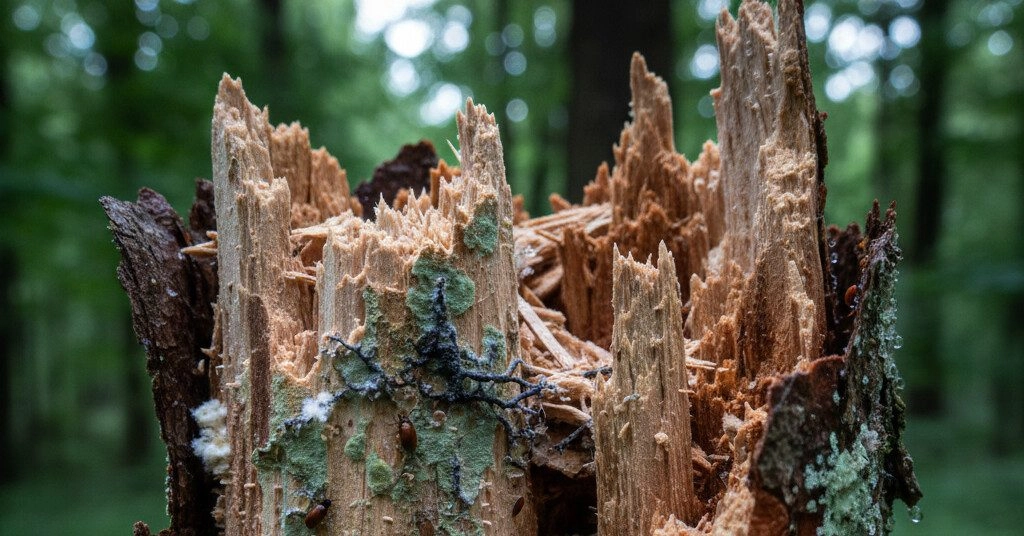
- Unusual Growths or Fungi: Keep an eye out for mushrooms, conks, or other fungal growths at the tree’s base, on the trunk, or along branches. These are strong indicators of internal decay.
- Thinning Canopy or Branch Dieback: If your tree’s crown looks sparse, or if branches are dying off, it suggests a bigger problem. Smaller, paler leaves are also a red flag.
- Peeling or Missing Bark: The bark acts as a protective shield. If it’s loose, peeling, or missing in patches, it exposes the inner wood to decay-causing organisms.
- Visible Wounds or Cracks: Any open wounds on the trunk or branches, whether from storm damage or improper pruning, are entry points for bacteria and fungi.
- Soft Spots at the Base or Trunk: Gently probe the bark with a soft tool. If you find soft, spongy spots, especially near the ground or where the trunk forks, it could mean significant internal decay.
- Changes in Lean or Root Heaving: A sudden or increased lean, or roots visibly lifting out of the ground, signal structural instability. This is often due to root rot or extensive decay.
- Brittle Branches: Healthy branches have some flexibility. If branches snap easily or feel unusually brittle, it might indicate decay, making them a falling hazard.
Step-by-Step Instructions: How to Inspect Your Trees for Decay
Now that you know what to look for, here’s a simple, step-by-step guide to inspecting your trees. Try to do this regularly, especially after major weather events.
- Step 1: Start with a General Visual Scan. Walk around your tree, looking at it from all angles. Notice its overall shape, the density of its leaves, and if anything looks out of place. Is it leaning more than before? Are there any broken branches?
- Step 2: Examine the Canopy and Branches. Look up into the crown. Are there any dead or dying branches? Are the leaves discolored, wilting, or smaller than usual? Pay attention to any areas where the leaves are sparse or missing.
- Step 3: Inspect the Trunk. Check the entire trunk from top to bottom. Look for cracks, splits, cankers (sunken areas), or areas where the bark is peeling or missing. Are there any holes that could indicate insect activity, which often goes hand-in-hand with decay?
- Step 4: Look for Fungal Growths. This is crucial. Search for mushrooms, conks, or other strange growths, especially at the base of the tree, in bark crevices, or on old pruning wounds. These fungi are often the fruiting bodies of decay organisms working inside the tree.
- Step 5: Check the Root Collar and Base. The root collar is where the trunk meets the ground. Look for soft spots, swelling, or fungal growth around this area. Gently probe with a small, blunt tool (like a rubber mallet or the handle of a screwdriver) to check for softness. Roots lifting out of the ground can also be a sign of root rot.
- Step 6: Assess Branch Flexibility. For lower, accessible branches, gently try to bend them. Healthy branches should have some give. If they are excessively stiff and snap easily, they might be decayed and brittle.
- Step 7: Look for Sawdust or Frass. Piles of sawdust or ‘frass’ (insect droppings) near the base of the tree or around holes in the bark can indicate boring insects. These insects often target weakened or decaying trees, creating entry points for further decay.
Sedro-Woolley-Specific Considerations: Climate, Species, and Regulations
Living in Sedro-Woolley means our trees face unique challenges. Our local climate and specific tree species influence how and where decay often appears. Understanding these factors can help you be a more effective tree detective.
Local Climate and Its Impact
Sedro-Woolley, nestled in Skagit County, experiences distinct weather patterns that play a significant role in tree health. Our winters are notably cold, wet, and often overcast, with average annual rainfall around 49 inches, much higher than the national average. This constant moisture, especially from mid-November to late February, creates ideal conditions for many types of fungi and pathogens that cause tree decay. Prolonged wet soil can lead to root stress and root rot, a common issue in our area. While summers are short and pleasant, the heavy precipitation during other seasons can stress trees and make them more vulnerable.
Common Sedro-Woolley Tree Species and Their Vulnerabilities
Our region is home to beautiful native trees like Western red cedar, Douglas fir, and Pacific silver fir. While resilient, these species are not immune to decay. For example, root rot is a common concern for conifers in damp environments. Deciduous trees can be susceptible to anthracnose or other leaf spot diseases that, while not always fatal, can weaken the tree over time and open the door to more serious decay.
Earthworks Tree Service understands these local challenges and how they affect the specific trees in your Sedro-Woolley yard.
Local Tree Regulations and Permits
Before you undertake any major tree work, especially if you suspect extensive decay, it’s wise to be aware of local regulations. The City of Sedro-Woolley Municipal Code (Chapter 12.40 “Tree Standards” and 17.50 “Landscaping”) governs trees on public property and those on private property that might affect public areas. Tree topping, for instance, is strictly prohibited. For larger tree removals, especially within critical areas or if converting land, Skagit County regulations (Chapter 14.24 Critical Areas Ordinance) may require review and authorization.
Always contact the City of Sedro-Woolley Community Development Department or Skagit County Planning and Development Services for specific permit requirements related to your property.
Local Insight: How Specific Areas in Sedro-Woolley Experience Tree Decay
Tree decay doesn’t always affect every part of Sedro-Woolley equally. Specific conditions in certain neighborhoods or areas can heighten the risk. For instance, properties located closer to the Skagit River or in lower-lying areas with poor drainage often experience more issues with saturated soil.
This excess moisture can quickly lead to root rot, especially for trees that aren’t well-suited to wet feet. Similarly, older neighborhoods with mature trees might see decay related to age, past storm damage, or changes in surrounding soil conditions over time.
When to DIY vs. Call a Professional
After inspecting your trees, you might wonder if it’s something you can handle yourself or if you need to call in a tree service. For minor issues like small dead branches that are easily accessible, you might be able to prune them with the right tools and knowledge. However, when it comes to decay, it’s often a sign of a deeper problem that requires expert attention. Tip from Earthworks Tree Service: If you see any of the following, it’s definitely time to call a certified arborist:
- Large Fungal Growths: Especially conks on the trunk or at the base, indicating significant internal decay.
- Extensive Branch Dieback: When a large portion of the canopy is dead or dying.
- Trunk Cracks or Splits: These compromise the tree’s structural integrity.
- Significant Lean or Root Heaving: Signs of instability that could lead to a fall.
- Soft Spots on the Trunk: Indicating advanced decay that could weaken the tree substantially.
- Proximity to Structures: If a potentially hazardous tree is near your home, garage, or power lines, always call a professional for a safe assessment and removal plan.
Frequently Asked Questions
Does Sedro-Woolley’s wet climate make trees more prone to decay?
Yes, many common tree diseases and pests thrive in wet conditions. Sedro-Woolley’s high annual rainfall can contribute to fungal infections, root rot, and other moisture-related issues, especially in poorly drained areas. Proper drainage and regular tree health checks are vital here.
How often should I inspect my trees for signs of decay?
You should check your trees at least once a year, preferably during different seasons. However, after severe weather like heavy winds or prolonged rain, it’s wise to perform an extra inspection. Catching issues early can prevent more serious problems down the line.
If I find decay, does that mean my tree needs to be removed?
Not necessarily. While some decay can be managed with proper pruning or treatment, severe internal decay or extensive root rot might make a tree hazardous. A certified arborist can accurately assess the extent of the decay and recommend the best course of action for your tree’s safety and health. This might include tree services like professional tree removal in Sedro-Woolley.
Is tree topping an acceptable way to manage a decaying tree?
No, tree topping is generally harmful and can make trees more susceptible to decay, disease, and structural failure. It creates large wounds that struggle to heal and encourages weak, rapid growth. Always opt for proper pruning techniques performed by a qualified arborist to maintain tree health.
Can I treat tree decay myself, or do I always need a professional?
For minor issues like small fungal growths on dead branches, you might be able to prune them yourself if you have the right tools and knowledge. However, for any signs of decay on the main trunk, large branches, or near the tree’s base, it’s always best to call a professional arborist. They have the expertise to safely diagnose and treat complex tree health problems.
Do I need a permit to remove a decaying tree in Sedro-Woolley?
In Sedro-Woolley, removing trees on private property usually doesn’t require a permit unless they are within critical areas or if it’s a large-scale timber harvest. However, it’s always best to contact the City of Sedro-Woolley’s Community Development Department or Skagit County Planning and Development Services to confirm any specific requirements before undertaking major tree work, especially if the tree is near public property or in a sensitive area.