
May 12, 2026
Key Takeaways
- Emerald ash borers threaten ash trees: This invasive beetle can kill ash trees by feeding beneath the bark and disrupting nutrient flow.
- Whatcom County faces potential risk: While the pest may not be widespread in every area, ash trees could become vulnerable if it spreads further in the region.
- Early detection protects trees: Warning signs such as thinning leaves, bark splitting, and D-shaped exit holes may indicate an infestation.
- Professional inspections matter: Arborists can identify symptoms early and recommend treatment or removal options.
- Preventive care is important: Monitoring tree health and avoiding movement of infested firewood can help slow the spread of the pest.
Trees play a major role in the natural beauty and ecological health of Whatcom County, including cities like Bellingham, Washington. Mature trees provide shade, improve air quality, and support wildlife throughout the region. However, invasive insects can threaten these valuable resources, especially when they target specific species.
One of the most destructive invasive pests affecting trees across North America is the Emerald Ash Borer. Since its introduction to the continent, this small beetle has destroyed millions of ash trees and caused widespread damage to urban and natural forests.
For property owners in Whatcom County, the key question is whether their trees could be affected. The answer depends largely on two factors:
- whether ash trees are present on the property and
- whether the emerald ash borer reaches the region.
Understanding the risks, recognizing the signs of infestation, and taking preventative action can help homeowners protect their landscapes.
What Is the Emerald Ash Borer?
The emerald ash borer, often abbreviated as EAB, is a small metallic green beetle originally native to Asia. It was first discovered in North America in the early 2000s and has since spread across many states and provinces.
Although the adult beetle is visible on tree bark or leaves during the summer months, the real damage is caused by its larvae. After eggs hatch on the bark of an ash tree, the larvae burrow beneath the bark and feed on the inner layer of the tree. This layer, known as the cambium, is responsible for transporting water and nutrients between the roots and the canopy. As larvae create winding tunnels through this tissue, they block the movement of nutrients throughout the tree.
Over time, this damage weakens the tree and eventually leads to its death.
How Ash Trees Become Infested
Emerald ash borers attack trees in a specific life cycle that makes them difficult to detect early. Adult beetles emerge from infested trees during warm months and search for new ash trees where they can lay eggs.
The eggs hatch into larvae that burrow through the bark and begin feeding beneath the surface. Because this activity occurs inside the tree, the damage is hidden for months or even years before visible symptoms appear.
During this time, the larvae create winding galleries under the bark that gradually disrupt the tree’s ability to transport nutrients. As the infestation grows, more larvae feed beneath the bark, accelerating the decline of the tree. By the time obvious symptoms appear, the infestation may already be well established.
Signs Your Ash Tree May Be in Danger
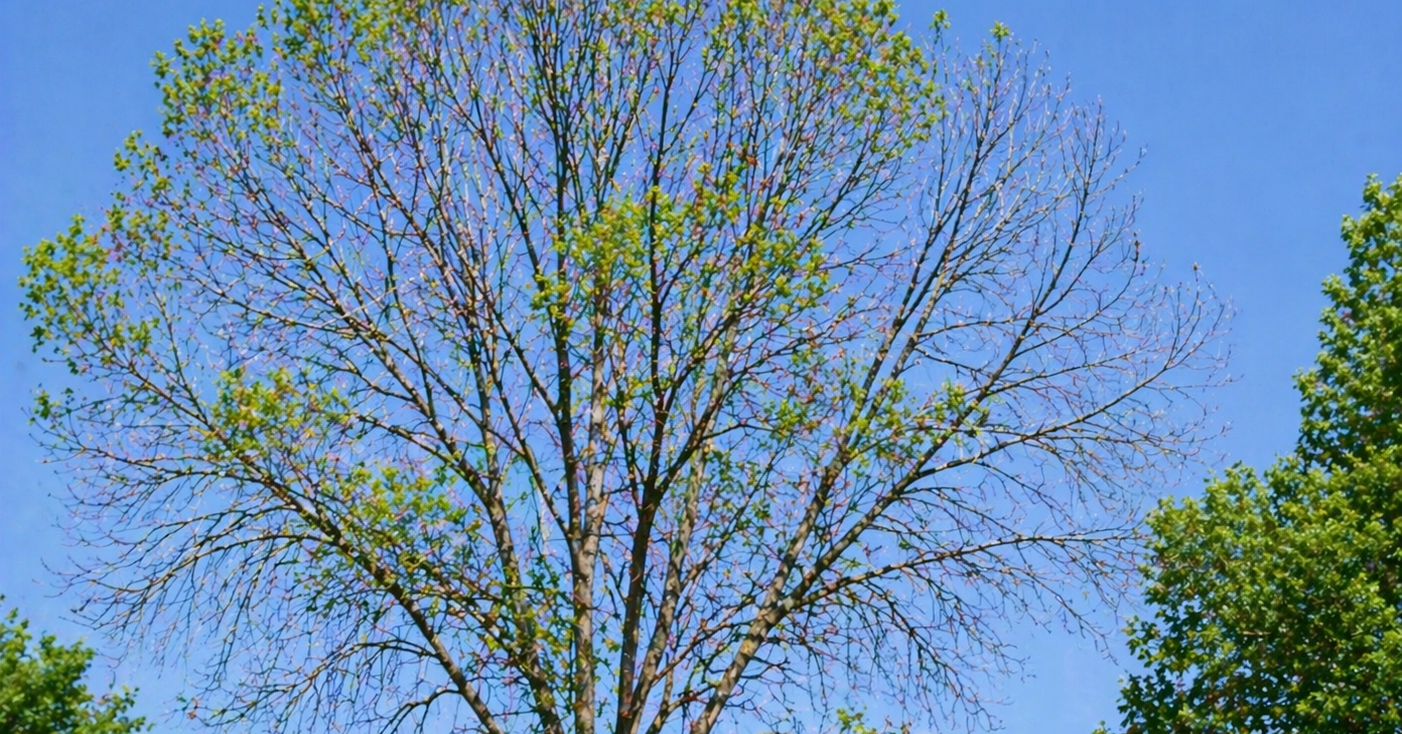
Recognizing early symptoms is one of the most important steps in protecting trees from emerald ash borers. Several warning signs may indicate that a tree is under attack. One of the first signs is thinning leaves in the upper canopy of the tree. As nutrient flow becomes restricted, branches near the top may lose leaves earlier than normal.
Bark splitting or cracking is another possible indicator. The tunnels created by larvae can cause the bark to separate or develop vertical splits along the trunk. Small D-shaped exit holes may appear as adult beetles emerge from the tree. These holes are often one of the clearest indicators of emerald ash borer activity.
Woodpecker activity can also signal infestation. Because woodpeckers feed on larvae beneath the bark, increased pecking may indicate insects are present. If multiple symptoms appear at once, the tree should be inspected by a professional arborist.
How the Emerald Ash Borer Spreads
The emerald ash borer spreads both naturally and through human activities. Adult beetles can fly to nearby trees, allowing infestations to gradually expand within neighborhoods and forests. However, long-distance spread often occurs when infested wood is transported from one region to another. Firewood, logs, and tree debris can carry hidden larvae beneath the bark.
When this wood is moved and stored in new areas, emerging beetles can establish new infestations. This is why many environmental agencies recommend using locally sourced firewood and avoiding the transportation of untreated wood materials.
Preventing the spread of invasive pests often requires cooperation between homeowners, communities, and local authorities.
Potential Impact on Whatcom Landscapes
If emerald ash borers become widespread in Whatcom County, the effects could extend beyond individual properties. Ash trees contribute to urban canopy cover, wildlife habitat, and neighborhood aesthetics.
Large-scale tree loss can alter landscapes significantly. Dead or dying trees may also become safety hazards, particularly in residential areas where branches can fall near homes, sidewalks, or power lines.
In addition, removing large numbers of trees can be costly for property owners and municipalities. Preventative monitoring and early action can help reduce these long-term impacts.
So, Is Your Whatcom Property at Risk?
The risk to your property depends largely on whether ash trees are growing nearby and whether emerald ash borers reach the area. Ash trees are not as dominant in the Pacific Northwest as they are in some eastern states, but they are still present in residential landscapes and urban plantings. If ash trees exist on your property or in nearby neighborhoods, there is a potential risk if the pest spreads into the region. Invasive insects often expand their range gradually, especially when infested wood or firewood is transported between regions. Homeowners who have ash trees should be particularly attentive to changes in tree health. Even if the emerald ash borer has not yet caused widespread damage locally, early monitoring ensures that any problems can be addressed quickly.
In other words, while not every property in Whatcom County faces immediate danger, properties with ash trees could become vulnerable if the insect arrives or becomes established.
Protecting Ash Trees on Your Property
Homeowners who have ash trees can take several steps to reduce the risk of damage from emerald ash borers. Regular inspections are one of the most effective strategies. Monitoring tree health allows homeowners to detect potential issues before they become severe.
Maintaining overall tree health also helps. Trees that receive proper care, pruning, and adequate growing conditions may be better able to withstand stress. Preventative insecticide treatments may also be recommended for valuable trees in areas where emerald ash borers are present or expected to spread. These treatments must be applied by trained professionals and may need to be repeated periodically.
If a tree becomes heavily infested, removal may be necessary to eliminate the hazard and prevent further spread of the pest.
Tree Protection and Inspection Services in Whatcom County
When it comes to identifying potential emerald ash borer threats, professional expertise can make a significant difference. The experienced arborists at Earthworks Tree Service help property owners evaluate tree health and determine whether ash trees may be at risk.
Our team understands the tree species common throughout Whatcom County and regularly performs inspections to detect early signs of pest activity or structural decline. By carefully assessing each tree, we can determine whether preventative treatment, pruning, or removal may be necessary.
Earthworks Tree Service also helps homeowners maintain strong, healthy trees through responsible pruning, structural evaluations, and ongoing maintenance. Our modern equipment and safe techniques allow them to work efficiently while protecting surrounding landscapes and structures. In situations where trees are severely damaged or hazardous, our crew can safely remove the tree and manage debris without disrupting nearby property. We also provide guidance on planting replacement trees that are well-suited to the Pacific Northwest climate.
Frequently Asked Questions
1. Is the emerald ash borer currently a threat to properties in Whatcom County, WA?
The pest has caused severe damage in many regions, and areas with ash trees could face risk if the insect spreads into the county.
2. How do I know if my property has ash trees in Whatcom County, WA?
Ash trees have compound leaves and distinct bark patterns. A professional arborist can confirm the species during an inspection.
3. What signs indicate emerald ash borers may be attacking a tree in Whatcom County, WA?
Common symptoms include thinning canopy, bark splitting, D-shaped exit holes, and increased woodpecker activity.
4. Can ash trees be treated to prevent emerald ash borer damage in Whatcom County, WA?
Preventative treatments may help protect trees when applied early by trained professionals.
5. Should I remove my ash tree if emerald ash borers appear in Whatcom County, WA?
Removal is usually recommended only if the tree is severely infested or becomes a safety hazard.
6. How often should ash trees be inspected in Whatcom County, WA?
Annual inspections are recommended to monitor tree health and detect early signs of infestation.
7. Can moving firewood spread emerald ash borers in Whatcom County, WA?
Yes. Transporting infested wood is one of the most common ways the pest spreads to new areas.
8. Who should I contact if I suspect emerald ash borers in Whatcom County, WA?
A certified arborist can evaluate the tree and recommend appropriate treatment or removal options.
Summary Checklist: Is Your Property at Risk?
Final Advice
Regularly monitoring your trees, learning to recognize early warning signs, and maintaining overall tree health are some of the most effective ways to reduce the impact of pests like the Emerald Ash Borer. Property owners should pay close attention to canopy thinning, unusual bark damage, or increased woodpecker activity, as these changes may signal underlying problems that require immediate attention.
If you have ash trees on your property in Whatcom County, scheduling routine inspections with a qualified arborist can help detect issues early. Early identification allows for timely treatment options that may preserve valuable trees and prevent the spread of pests to nearby landscapes. In cases where a tree becomes severely weakened or hazardous, prompt removal can protect surrounding vegetation and reduce safety risks around homes and walkways.
With proper monitoring and professional guidance, property owners can protect their trees and help preserve the natural beauty of Whatcom County for generations to come.
Working with experienced professionals can make a significant difference in managing tree health effectively. The skilled arborists at Earthworks Tree Service provide thorough tree inspections, pest assessments, and expert recommendations tailored to the unique conditions of the Pacific Northwest. Our team understands local tree species and the environmental challenges that affect them.