
August 4, 2026
Key Takeaways
- Dangerous trees often show warning signs before they fail, including cracks, lean, dead limbs, and fungal growth.
- In Bellingham’s wet, windy climate, trees with hidden decay or weak structure can become hazardous quickly.
- Root problems, canopy imbalance, and pest or disease symptoms can all indicate a tree may fall.
- Regular inspections by an ISA-certified arborist help identify risks before they turn into emergencies.
- Earthworks Tree Service provides tree removal, pruning, cabling, bracing, and 24/7 emergency service across Bellingham and Mount Vernon.
Most Bellingham, Washington homeowners do not think about tree risk until a storm brings a branch down or a leaning trunk suddenly looks worse than it did last week. That is a problem in Western Washington, where heavy rain, soaked soil, and strong winds can expose hidden weaknesses fast. A tree does not have to be obviously dead to be dangerous, and some of the most serious hazards are the ones people miss until failure is close. The good news is – trees usually give warning signs before they fall. Cracks in the trunk, major deadwood, sudden lean, fungal growth, and root instability are all clues that a tree may need professional attention. In a city like Bellingham, where trees are a major part of the landscape, learning to spot those signs can protect homes, vehicles, people, and utility lines.
Why Trees Become Hazardous
A tree becomes dangerous when its structure is weakened enough that it could fail and injure people or damage property. That failure may come from decay, root problems, storm damage, construction injury, poor pruning, or age-related decline. In the Pacific Northwest, constant moisture can make some problems harder to see while also making soils softer and roots less stable.
Trees can also become hazardous when they lean too much, carry too much weight on one side, or develop weak branch attachments. Some trees look healthy at a distance but have internal decay or compromised roots that are not obvious from the ground. That is why hiring a ISA-certified tree service firm in Bellingham, Washington assists you in consultation, permitting, and reporting for situations that require a more detailed professional assessment.
1. The Tree Suddenly Leans More Than Before
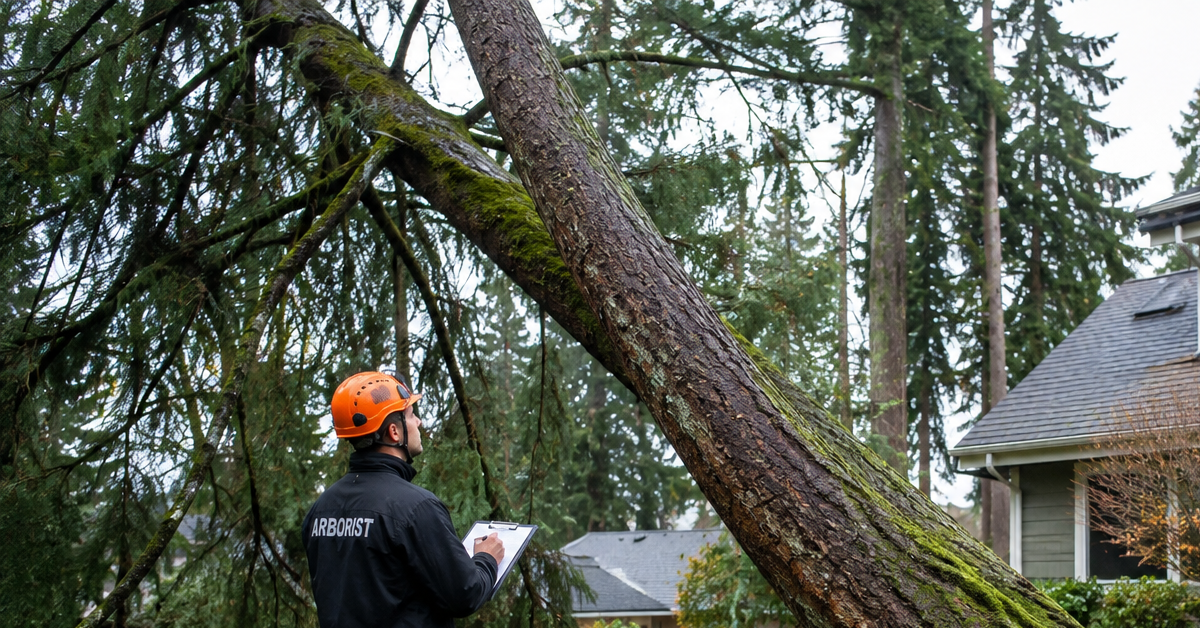
A lean is not always a problem, but a sudden change in lean is a major red flag. If a tree starts tilting after wind, rain, or ground movement, it may mean the roots have shifted or the trunk has lost structural support. In Bellingham’s saturated soil, that kind of movement can happen more easily than many homeowners expect. You should pay close attention if the lean is new, getting worse, or accompanied by lifted soil on one side of the tree. A tree that once stood straight and now appears off balance may be at risk of toppling in the next storm. This is especially true for large trees near homes, driveways, fences, or parking areas.
2. Cracks, Splits, or Hollow Spots Appear
Visible damage to the trunk or major limbs is another serious warning sign. Cracks and splits can indicate that the wood is under stress and may fail under wind load or the weight of the canopy. Hollow sections, cavities, or large areas of missing bark can also suggest internal decay. Fungal fruiting bodies around cracks or at the base of the trunk may point to rot inside the tree. UC IPM notes that mushrooms, conks, and other decay indicators are common signs a tree may be hazardous. If a trunk has visible damage, it should be checked by a qualified arborist before the next storm tests it.
3. Dead Branches Are Hanging in the Canopy
Dead limbs are one of the easiest signs to notice and one of the most dangerous to ignore. Dead branches become brittle and can fall without much warning, especially during rain, wind, or freeze-thaw cycles. In some cases, the branch may hang partially attached and remain a hazard long after the storm has passed.
Look for limbs without leaves when the rest of the tree is healthy, branches with peeling bark, or wood that looks dry and lifeless. A cluster of dead wood in the upper canopy may indicate that the tree is under stress or declining from the top down.
4. Fungi, Conks, or Mushrooms Grow Near the Base
Fungal growth at the base of a tree or along the trunk is one of the clearest signs that internal decay may be present. Not every fungus means the tree is doomed, but mushrooms and conks often suggest wood rot or a weakening root system. In Western Washington’s moist climate, fungal growth is common, which makes it even more important to know whether it is harmless or a sign of decay. If you see shelf-like mushrooms, soft spots in the trunk, or fungal bodies growing from cracks, the tree should be evaluated quickly. The visible fungus is often only part of the problem, because the real concern may be hidden inside the wood. In those cases, pruning alone may not be enough to make the tree safe.
5. The Tree Drops Heavy Limbs or Shows Poor Structure
A tree that repeatedly sheds limbs may be telling you that its structure is failing. Poor branch attachments, included bark, heavy end weight, and unbalanced crowns all increase the chance of limb breakage. If the tree has already lost large branches once, it may do it again. This can be especially dangerous when limbs hang over roofs, sidewalks, or places where people park or walk. Trees with heavy tops, multiple trunks, or large branches extending too far outward are often stronger candidates for reduction, cabling, bracing, or removal.
6. Roots Are Exposed, Damaged, or Lifting Soil
Many tree failures begin underground. A damaged root system cannot anchor the tree properly, and homeowners may not realize there is a problem until the tree begins leaning or the ground around it shifts. Root damage can happen from construction, soil compaction, excavation, erosion, or disease. Signs of root trouble include –
- exposed roots that are broken or cut
- soil pulling away from the base
- mushrooms near the root zone, or
- a tree that rocks slightly when the ground is wet.
A compromised root system is especially risky in storm-prone areas because wind can act like a lever on the canopy. If the root system is failing, the tree can fall suddenly even if the trunk looks normal.
When to Call an Arborist
If you notice one warning sign, it is worth watching the tree closely. If you notice several, it is time to call a ISA-certified arborist in Bellingham, Washington right away. Bellingham’s weather can turn a weak tree into an emergency fast, especially during windstorms and long periods of rain.
Earthworks Tree Service is a local, ISA-certified tree company serving Bellingham, Mount Vernon, Blaine, Lummi Island, Sedro-Woolley, Burlington, Lynden, Ferndale, Mount Vernon, La Conner, Rockport, Anacortes, and Skagit County.
Our team provides tree removal, tree trimming & pruning, stump grinding, commercial tree services, tree cutting, ISA-certified consultation, permitting & reporting, electrical line clearance certified services, emergency tree removal, cabling and bracing, and other services. A trained arborist can tell you whether the tree can be saved or whether it should come down before it fails on its own. Get in touch with our team now at (360) 994-1211 to Book Your Free Estimate !!
Frequently Asked Questions About Tree Removal Timing and Hazardous Tree Warning Signs by Homeowners in Bellingham, WA
How do I know if a tree is dangerous in Bellingham, WA?
Look for sudden lean, trunk cracks, dead hanging limbs, fungal growth, exposed roots, or repeated limb failure. Multiple warning signs mean the tree should be checked by a professional.
Does a leaning tree always need to be removed?
Not always. Some leaning trees can be stabilized or preserved, but a sudden or worsening lean should always be evaluated quickly.
Are mushrooms on a tree always bad?
Not always, but fungal growth near the trunk or roots often signals decay inside the tree. It should be inspected by an arborist.
Can cabling or bracing make a dangerous tree safe?
In some cases, yes. Earthworks offers cabling and bracing for trees that can still be preserved with structural support.
What should I do if a tree looks like it might fall soon?
Keep people and vehicles away from the area and call an emergency tree service immediately.
Summary Checklist: Critical Warning Signs of Tree Instability
| Warning Sign | What It Could Mean | Why It Matters |
|---|---|---|
| Sudden lean | Root failure, soil movement, or structural weakness | A leaning tree can topple in wind or saturated soil |
| Trunk cracks or splits | Wood stress or internal decay | Cracks can widen and lead to sudden failure |
| Dead hanging branches | Brittle wood or advanced decline | Dead limbs can fall without warning on people or property |
| Mushrooms or conks on the trunk | Possible internal rot or root decay | Fungal growth may signal hidden structural damage |
| Poor structure or repeated limb drop | Weak attachments or canopy imbalance | The tree may need pruning, cabling, or removal |
| Exposed, damaged roots | Loss of anchoring support | Root failure can cause the entire tree to fall |
Final Advice
A dangerous tree rarely becomes a hazard overnight. Bellingham’s frequent rain, saturated soil, and strong winds can quickly worsen existing tree problems, making early detection important. Pay attention to warning signs such as sudden leaning, trunk damage, dead limbs, fungal growth, or exposed roots. Having a tree inspected by a qualified arborist can help identify risks early and determine the right solution, whether that means pruning, cabling, bracing, or removal. Taking action before a tree fails can help prevent property damage, reduce safety risks, and keep your landscape healthier throughout the year.
If you are uncertain about a tree on your property, a dedicated tree service firm in Bellingham, Washington can perform tree assessment on a timely basis to prevent costly damage and keep your home safer year-round. It’s time to call our team at (360) 994-1211 to Book Your Free Estimate !!