
October 7, 2026
Winter strips trees down to their structure. Leaves are gone, growth has stopped, and whatever a tree has been hiding all summer is suddenly easier to see. That makes winter one of the best times to catch disease before it spreads or leads to failure.
The Pacific Northwest’s wet, mild winters create ideal conditions for fungal infections, root rot, and decay. Trees that looked fine in August can show serious problems by January. Knowing what to look for now can save you from an emergency call later.
Here are the signs worth paying attention to this winter, and what they usually mean.
Fungal Growth on the Trunk or Base
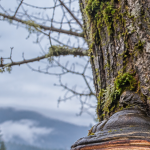
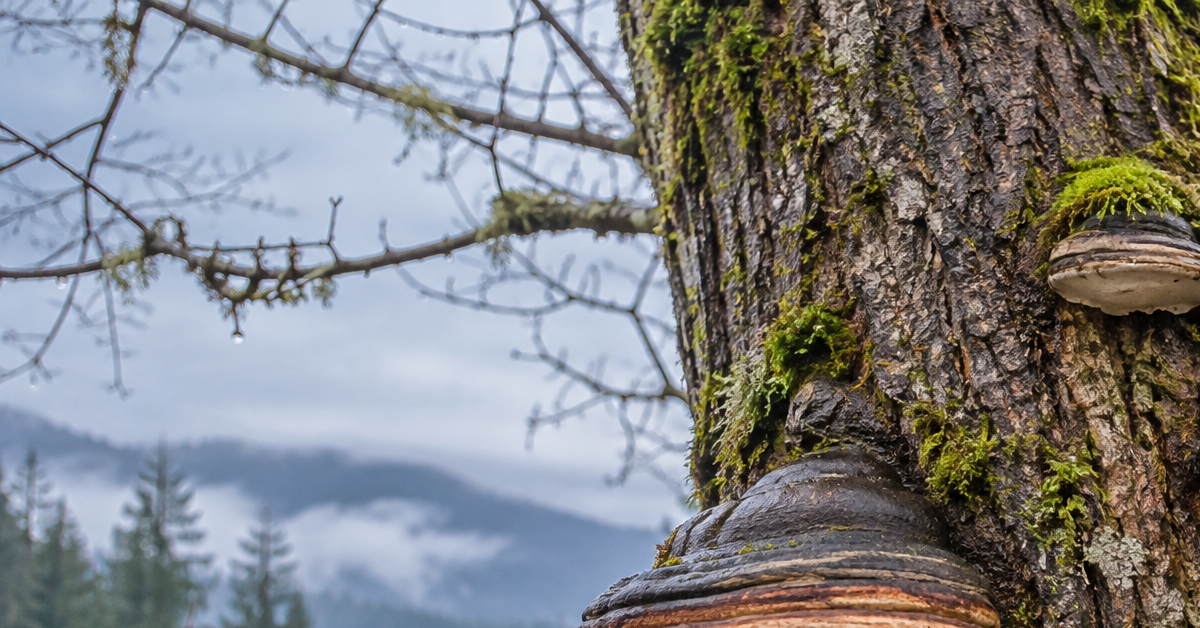
Mushrooms, conks, shelf fungi, or bracket fungi growing on or near the trunk are not decorative. They’re a sign that something inside the tree is breaking down. These fruiting bodies appear when internal decay has been underway for a while, often years.
Where the fungus shows up matters. Growth at the base or root flare usually points to root rot or decay in the lower trunk, both of which affect the tree’s structural stability. Fungal bodies higher up the trunk or on major branches suggest internal decay in those areas.
Not every fungus on a tree is a death sentence. Moss, lichen, and certain fungi can coexist with healthy trees. But fleshy conks and shelf fungi on the trunk itself are a different story. If you see them, get an arborist to assess the tree before the next storm loads it with wind and rain.
Bark Cracking, Peeling, or Falling Off
Healthy bark stays attached. When bark starts splitting, peeling away in large patches, or falling off in chunks, the tree is telling you something is wrong underneath.
Vertical cracks that run along the trunk can result from freeze-thaw cycles, internal pressure from decay, or structural stress. Horizontal cracks are usually more concerning because they indicate potential failure points.
Bark that separates from the wood beneath it (sometimes called “sloughing”) often means the cambium layer has died in that area. On deciduous trees in winter, this is easier to spot because nothing else is competing for your attention.
Some bark shedding is normal for certain species. Birch, sycamore, and some maples naturally shed outer bark. The concern is when bark loss exposes soft, dark, or wet wood underneath, or when it happens on a species that doesn’t normally shed.
Canopy Thinning and Dead Branches
With the leaves gone, winter gives you a clear look at a tree’s branch structure. A healthy deciduous tree still has a full, evenly distributed framework of branches. Gaps, bare sections, and clusters of dead twigs tell a different story.
Dead branches scattered throughout the canopy (not just one side) often indicate a systemic problem. Root disease, vascular infections, or progressive internal decay can all cause this pattern. A tree that’s losing branches from the top down is usually in serious decline.
On evergreens, watch for needle loss, browning, or thinning that goes beyond normal seasonal shedding. Conifers that hold onto dead, brown needles instead of dropping them are stressed. A Douglas fir or western red cedar that’s noticeably thinner than it was last year deserves a closer look.
If you’re not sure whether what you’re seeing is normal dieback or something worse, a tree health assessment can sort it out.

Soft, Spongy, or Discolored Wood

If you press on an area of the trunk and it gives, that’s decay. Healthy wood is firm. Soft spots, spongy patches, or areas where a knife or screwdriver sinks in easily mean the wood is rotting from the inside out.
Internal decay is one of the hardest problems to catch because the tree can look normal on the outside while being hollowed out within. Western Washington’s wet weather accelerates hidden rot, especially in species prone to heart rot like big-leaf maple and red alder.
Discolored wood at wound sites is another red flag. If a pruning cut, storm wound, or old damage site shows dark staining, oozing, or an unpleasant smell, infection has set in. Trees can’t heal wounds the way animals do. They compartmentalize damage, and when that process fails, decay spreads.
Leaning, Root Heaving, or Soil Changes
A tree that’s always leaned at the same angle is one thing. A tree that’s started leaning recently, or whose lean has gotten worse, is a structural concern. New lean means something has changed underground.
Check the base of the tree and the surrounding soil. Cracked or heaving soil on the side opposite the lean can mean roots are pulling out of the ground. Exposed roots that look dark, mushy, or broken suggest root rot or mechanical damage.
Winter is a good time to assess this because the ground is saturated. Waterlogged soil weakens root anchorage, and atmospheric rivers and prolonged rain can push compromised root systems past their limits. A tree that survived every storm so far isn’t guaranteed to survive the next one if its roots are failing.
Root health drives everything above it. If the roots are compromised, no amount of pruning or cabling fixes the problem.
Oozing, Cankers, or Unusual Growths
Cankers are dead, sunken, or swollen areas on the bark, usually caused by fungal or bacterial infections. They disrupt the flow of water and nutrients through the trunk or branch, and they tend to grow over time.
Oozing sap or dark fluid from the trunk (sometimes called “bleeding”) can indicate bacterial wetwood, Phytophthora infection, or other pathogens that thrive in wet conditions. In western Washington, these problems are common during the rainy season and can go unnoticed until the damage is advanced.
Abnormal growths like burls aren’t always a problem on their own, but clusters of small, weak shoots (epicormic growth or “water sprouts”) growing along the trunk or major branches can signal that the tree is under stress and trying to compensate for lost canopy.
Woodpecker Activity
This one surprises people, but heavy woodpecker activity on a single tree often means insects have moved in, and insects usually move into wood that’s already compromised. Woodpeckers are following the food.
Rows of holes or extensive pecking damage concentrated on one tree, especially when neighboring trees aren’t getting the same attention, is worth investigating. The woodpeckers aren’t the problem. What attracted them might be.
What to Do If You Spot These Signs
Don’t ignore what you see and hope the tree sorts itself out. Disease and decay in trees don’t reverse on their own. They progress. Winter gives you a window to catch problems before spring growth masks them again.
Here’s the practical approach:
- Walk your property and look at each tree from multiple angles. Some problems are only visible from one side.
- Don’t climb a suspect tree or poke at damage high up. Stick to what you can see from the ground.
- Take photos of anything that concerns you. Close-ups of fungal growth, cracks, or dead sections help an arborist evaluate what’s going on.
Schedule an arborist consultation for any tree that shows multiple signs or sits close to your home, driveway, or a high-traffic area.
Not every symptom means the tree needs to come down. Some problems are manageable with pruning, monitoring, or treatment. Others require removal before conditions get worse. An arborist can tell you which situation you’re looking at.
For more on evaluating risk, see our guides on dangerous tree warning signs and how to tell if your tree is a risk.
Why Winter Inspections Matter in Western Washington
The Pacific Northwest doesn’t get the deep freezes that kill off pathogens the way a Midwest winter does. Instead, we get months of rain, mild temperatures, and saturated soil, which is exactly what most tree diseases need to thrive.
Wet weather drives hidden rot. Atmospheric rivers weaken root systems. Windstorms test every structural weakness a tree has. The combination means that a diseased tree in Whatcom or Skagit County isn’t just declining slowly. It’s a potential failure waiting for the right storm.
A winter inspection catches these problems while they’re still visible and before spring growth covers them up. It’s also the easiest time to schedule work, since most tree companies are less backed up than they are after a summer of pruning requests.
Schedule a Winter Tree Health Assessment
If you’ve noticed any of these signs on your property, or if it’s been a while since anyone has looked at your trees, winter is the right time. Earthworks Tree Service provides certified arborist assessments throughout Whatcom and Skagit County.
Call us or request a free estimate to set up a winter tree inspection.