
October 14, 2026
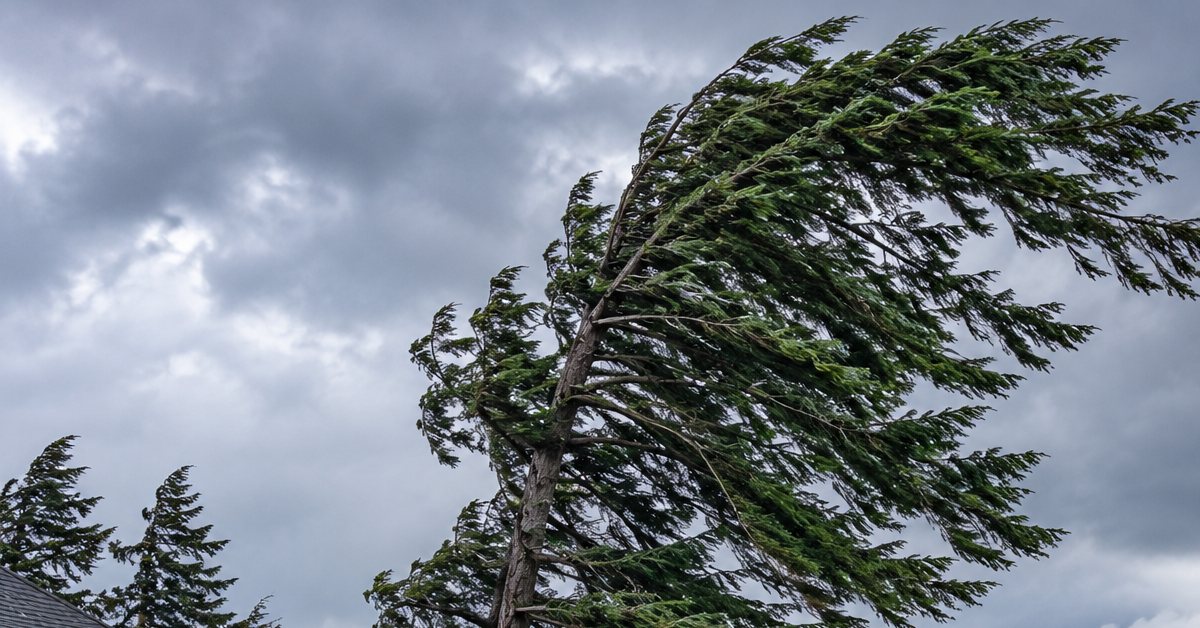
Higher wind speed, greater height, and denser canopy all raise the chance that a tree will fail. Wind force grows with the square of its speed, so small increases in gusts create much bigger loads. Trees are built to flex and sway. Most survive years of storms without a problem. But all three factors can push a tree past its limits: how hard the wind blows, how tall the tree stands, and how much foliage it carries.
Understanding these helps you spot risk early. It also helps you decide when pruning, support, or removal makes sense.
How Wind Speed Creates Load
Wind pushes against every branch and leaf. The force is not a simple straight line. It rises with the square of the wind speed. Double the speed, and the force can grow about four times. A tree that handles a 25 mph breeze may struggle in a 50 mph gust. The load travels from the crown down the trunk to the roots. Any weak point along that path can fail.
Duration matters too. Long storms tire a tree. Wood fibers bend again, and roots loosen in the soil. In Bellingham, Washington, strong winter winds often arrive with heavy rain. That combination is rough on trees. The National Weather Service in Seattle issues wind advisories and warnings for the region, and they are worth watching before a storm.
Why Taller Trees Face Greater Leverage
Think of a tree as a long lever. The wind pushes the top, and the base takes the strain. The taller the tree, the longer the lever. A small force at the top becomes a large twisting force at the bottom.
Height also exposes the crown to stronger wind. Wind speed tends to increase with height above the ground. A tree rising above its neighbors gets hit harder than one sheltered in a stand.
Shape plays a role. A tree with a thick, tapered trunk handles load better than a tall, thin one. Trees grown in crowded groups often become tall and slim because they race for light. If neighbors are removed, the remaining tree may suddenly face wind it has never felt. This is a common cause of failure after clearing or construction.
Canopy Density: The Sail Effect
A full crown with thick foliage catches more wind. Evergreens such as Douglas-fir and western hemlock keep their needles in winter, which is exactly when storms are strongest. That means more surface area is exposed during the windiest months.
Deciduous trees such as bigleaf maple drop leaves in fall, so their sail area is smaller in winter. They face different problems, including heavy limbs and wet moss. Even so, a dense crown in summer can still catch strong gusts.
Wet conditions add weight. Rain soaks into foliage and moss. Snow clings to branches. A heavy canopy under wind and moisture adds up to a big load on limbs and trunk.
Root and Soil Conditions Matter
Wind load does not stop at the trunk. It ends in the roots. The soil must hold the tree upright, and wet winters can weaken that grip.
Saturated soil loses strength. Roots can slip, and the tree can lean or tip. Shallow soils, compacted lots, and areas with a high water table are especially risky. Root damage from digging, trenching, or construction removes anchoring strength. A tree with a cut root plate may stand for years and then fall in the first big storm.
Check the base of the tree. Cracked soil, lifted roots, mushrooms, or a gap on one side can signal trouble. A sudden lean is a serious warning.
How These Factors Work Together
Risk rarely comes from one factor alone. It builds when several line up. Picture a tall Douglas-fir with a dense crown on wet soil. The tree is tall, so leverage is high. The crown is full, so wind load is high. The ground is soft, so anchorage is low. Add a strong gust, and the odds of failure climb quickly.
Now picture a shorter, well-pruned tree with a sturdy base on firm ground. The same gust is far less likely to cause failure. The difference comes from structure, health, and site.
Defects That Raise Risk
Several defects make any tree more vulnerable.
Decay inside the trunk or limbs weakens the wood. Cavities, fungal conks, and soft areas are signs. Cracks and splits show that fibers have already failed. Co-dominant stems, where two trunks grow together, can split apart if bark is trapped between them. Dead branches, often called widowmakers, can fall without warning. Leaning trees with lifted roots may be close to failing.
None of these means a tree must come down, but a professional should measure how serious each defect is.
Ways to Reduce Failure Risk
You cannot control the wind, but you can control the tree.
- Start with proper pruning. Removing dead limbs and thinning select branches lets wind pass through the crown.
- Reduction pruning can shorten long, heavy limbs. Done well, this lowers load without harming the tree. Avoid topping, which creates weak regrowth and decay.
- Never remove too much foliage at once. Many standards suggest keeping removal modest, and the Tree Care Industry Association (TCIA) offers background on accepted practices.
- Support systems help in some cases. Cables and braces can connect weak limbs or stems. They do not fix every problem, but they can reduce splitting.
- Manage the site. Protect root zones from digging and compaction. Keep soil and mulch away from the trunk. If you remove nearby trees, think about how the remaining ones will handle new wind exposure.
- Finally, get an inspection. A trained arborist can use tools and experience to judge whether a tree is stable. Many use a standardized process through the International Society of Arboriculture (ISA) to rate risk and recommend options.
When Removal Is the Right Call
Sometimes risk cannot be reduced enough. A tall tree with major decay, a failing root system, or a severe lean next to a home may be too dangerous. In that case, removal is the responsible choice. Waiting often costs more. A planned removal is safer and easier than an emergency one. If you are unsure, ask for a professional opinion.
Stay Alert After Storms
After strong winds, walk your property carefully. Look for broken limbs, cracks, leaning trees, or lifted soil. Do not stand under damaged branches. Stay away from trees touching power lines. If something looks unsafe, keep people clear and call a professional.
Earthworks Tree Service helps homeowners in Bellingham, Washington, identify and reduce tree failure risks caused by strong winds, excessive height, and dense canopies. Our ISA-certified arborists assess tree structure, branch condition, and potential hazards to recommend appropriate care. Professional tree trimming and crown reduction can help manage canopy density and reduce wind resistance when performed correctly. We also inspect trees for structural weaknesses, decay, and root-related concerns that may increase the risk of failure during storms. For trees with weak branch unions, cabling and bracing may provide additional support when appropriate. If a tree is severely damaged or poses an unacceptable safety risk, our team can recommend safe, professional tree removal.
With 24/7 emergency tree services, Earthworks can also respond to hazardous trees and storm damage. Contact Earthworks Tree Service at (360) 994-1211 for a professional tree risk assessment and a free estimate in Bellingham and surrounding Whatcom County communities.
Frequently Asked Questions
Does wind speed matter more than tree height?
Both matter. Wind force rises sharply with speed, and height adds leverage. Together they create the biggest load.
Do evergreens fail more often than deciduous trees in winter?
They can. Evergreens keep their foliage, so they catch more wind during winter storms. Deciduous trees have other risks, such as heavy limbs.
Can pruning reduce wind damage?
Yes, when done correctly. Removing dead wood and thinning select branches lowers wind load. Poor pruning, like topping, can make trees weaker.
How can I tell if my tree is at risk?
Look for a lean, cracks, decay, dead branches, and lifted roots. Any of these signs deserves a professional inspection.
When should I call an arborist?
Call before storm season or any time you notice defects. Call right away after a storm if a tree is damaged or leaning.