
October 14, 2026
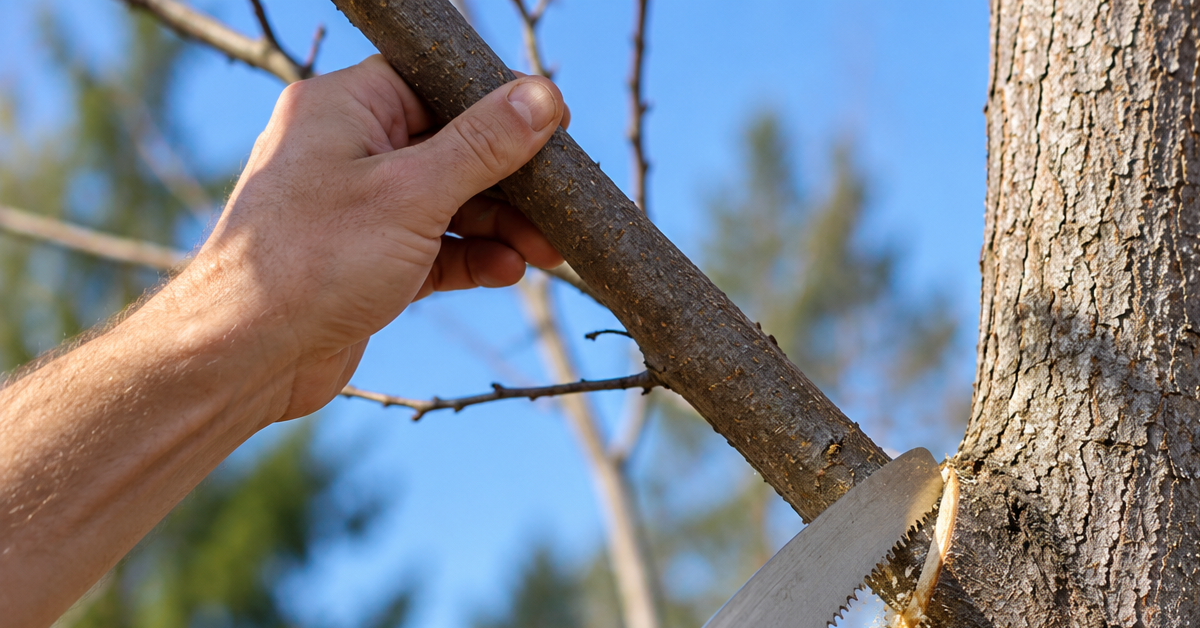
Cut location matters because it decides how well a tree seals the wound. ANSI A300 pruning cuts are made just outside the branch collar, which lets the tree defend itself and heal.
Pruning is not just trimming. Every cut is a wound, and the tree must respond to it. A cut in the right place triggers a strong, organized defense. A cut in the wrong place can open the door to decay. The ANSI A300 standards describe how professionals should prune to protect tree health. This article explains the science behind those rules and why location is so important.
What Is ANSI A300?
ANSI A300 is a set of voluntary industry standards for tree care. The standards cover topics such as pruning, fertilization, and risk management. The pruning section sets out accepted practices for how and why trees should be cut. The Tree Care Industry Association serves as the secretariat for the standards, and groups from across the industry help develop them.
A companion guide from the International Society of Arboriculture explains the practices in plain language. These resources give homeowners and companies a common language for quality work.

How a Tree Responds to a Wound
Trees do not heal like people. They do not regrow damaged tissue in the same spot. Instead, they wall off the injury and grow new wood around it. This process is called compartmentalization.
When a cut exposes wood, the tree forms chemical and physical barriers around it. These barriers slow the spread of decay-causing fungi. New growth then forms around the edge of the wound. This ring of new tissue is called a callus or woundwood. Over time, it may close over the cut.
The tree’s response depends on energy and on where the cut lands. A healthy tree with strong defenses can seal a well-placed cut quickly. A stressed tree struggles. A cut in the wrong place leaves the tree with little to work with.
The Branch Collar and Branch Bark Ridge
Look closely where a branch joins a trunk. You will see two features –
- The branch collar is a slightly swollen ring at the base of the branch, and the branch bark ridge is a raised line of bark in the crotch above the branch.
These features are more than decoration. The collar contains tissue that forms a natural chemical barrier. It is the tree’s built-in defense zone. When a branch dies or is removed, the collar helps seal the connection and keep decay out of the trunk.
The A300 approach is to cut just outside the collar and ridge. That keeps the defense tissue intact. The cut leaves a small, clean wound that the tree can close.
Why Flush Cuts Cause Problems
A flush cut slices the branch off tight against the trunk. It removes the collar and exposes the trunk’s inner wood. It may look neat, but it is harmful.
Without the collar, the tree loses its barrier. The wound is larger and sits on the trunk, where decay can spread more easily. Closure is slower and often incomplete. Over time, a hidden column of decay can weaken the trunk.
Why Stubs Are Also Harmful
The opposite mistake is leaving a long stub. A stub is a piece of branch left beyond the collar. It may seem safer, but it creates a different problem. The collar cannot seal a stub properly. The stub often dies back and rots. Decay can then move from the stub into the trunk.
The rule is simple. Cut close enough to preserve the collar, but not so close that you damage it. Precision is the key.
The Three-Cut Method for Larger Limbs
Heavy limbs add another risk. If you cut straight through a large branch, its weight can tear bark down the trunk as it falls. That causes a long, damaging wound.
The three-cut method prevents this.
- First, make an undercut a short distance out from the final location. This cut goes about one-third of the way through.
- Second, make a top cut slightly farther out. The limb falls, leaving a short stub.
- Third, make the final cut just outside the branch collar to remove the stub cleanly. This method controls the weight and protects the bark. It is a basic technique, and it separates careful pruning from guesswork.
Reduction Cuts and Where They Go
Sometimes a limb needs to be shortened instead of removed. In that case, a reduction cut is used. The cut goes back to a lateral branch that can take over as the new leader.
The A300 guidance suggests the remaining lateral should be at least one-third the diameter of the stem being removed. A branch that is too small cannot support the tree’s growth and may die back. Making the cut at the right spot lets the tree redirect energy and heal.
This is very different from topping. Topping cuts large limbs at random points, leaving stubs with no strong lateral. The tree responds with weak, fast shoots that break easily. Topping is not an accepted practice under A300.
How Much Can You Prune at Once?
Location is not the only factor. Amount matters as well. Leaves produce the tree’s energy. Removing too many at once starves it.
A common guideline is to avoid removing more than about 25 percent of the live foliage in a single year. Young, vigorous trees may tolerate more. Older or stressed trees may need less. Species, age, and health all play a role. A professional can judge the right amount for your tree.
Do Wound Dressings Help?
Many people paint cuts with tar or sealant. Research and the A300 approach do not support routine use of wound dressings. They do not stop decay, and they can trap moisture.
The better strategy is a proper cut in the right place on a healthy tree. Let the tree do the work it was designed to do. The Washington State University Extension offers practical advice for caring for trees in the Pacific Northwest.
How to Choose a Pruning Professional
Quality pruning requires training. Ask whether a company follows ANSI A300 practices. Ask who will be on the job and what methods they use. Be cautious of anyone who offers topping, uses climbing spikes on trees that are staying, or cannot explain where cuts will go. Request a written scope of work. It should describe which limbs will be removed and how much of the crown will be cut. A clear plan shows that the crew understands the goal.
Earthworks Tree Service helps homeowners in Bellingham, Washington, identify and reduce tree failure risks caused by strong winds, excessive height, and dense canopies. Our ISA-certified arborists assess tree structure, branch condition, and potential hazards to recommend appropriate care. Professional tree trimming and crown reduction can help manage canopy density and reduce wind resistance when performed correctly.
Earthworks Tree Service also inspects trees for structural weaknesses, decay, and root-related concerns that may increase the risk of failure during storms. For trees with weak branch unions, cabling and bracing may provide additional support when appropriate. If a tree is severely damaged or poses an unacceptable safety risk, our team can recommend safe, professional tree removal.
With 24/7 emergency tree services, Earthworks can also respond to hazardous trees and storm damage. Contact Earthworks Tree Service at (360) 994-1211 for a professional tree risk assessment and a free estimate in Bellingham and surrounding Whatcom County communities.
Frequently Asked Questions
What is the branch collar?
The branch collar is a swollen area where a branch meets the trunk. It contains tissue that helps the tree seal wounds and resist decay.
Where should a pruning cut be made?
Cut just outside the branch collar and branch bark ridge. Do not cut flush with the trunk and do not leave a long stub.
Is a flush cut ever acceptable?
No. A flush cut removes the collar and increases the chance of decay. It slows healing and weakens the trunk over time.
Should I seal pruning cuts with paint?
Usually not. Wound dressings do not prevent decay and can trap moisture. A well-placed cut heals best on its own.
Is ANSI A300 required by law?
It is a voluntary industry standard. Many professionals follow it, and it is often used as a benchmark for quality work.