
March 13, 2026
Key Takeaways
- Earthworks Tree Service helps Burlington, Washington, homeowners identify and resolve critical soil and drainage issues that lead to tree decline.
- Burlington’s landscape is defined by the Skagit Soil Series, which consists of very deep, poorly drained silty clay loams formed in alluvium and volcanic ash. While these soils are nutrient-rich, their high clay content often leads to waterlogging that can suffocate sensitive root systems.
- Recognizing symptoms like yellowing leaves, stunted growth, and fungal presence is key to early intervention.
- Effective solutions range from simple DIY soil amendments to professional services like deep root aeration and tailored drainage plans.
- Before addressing a declining tree, property owners must comply with the City of Burlington Municipal Code. Removing or significantly injuring a private tree typically requires a permit if the specimen is 8 inches or greater in diameter, a measure designed to protect the local urban canopy.
Have you noticed your favorite shade tree in Burlington, Washington, looking unhealthy lately? Yellow leaves, slow growth, or dying branches often point to soil or drainage problems. Many trees decline because their roots cannot breathe properly when the soil stays saturated. Burlington, Washington, rainfall patterns and soil composition create real drainage challenges for tree roots.
Understanding Soil & Drainage Issues: What Is Happening
Soil and drainage issues are silent assassins of tree health. When the soil around a tree’s roots becomes unhealthy, it directly impacts the tree’s ability to absorb water, nutrients, and essential oxygen. Think of a tree’s root system as its mouth and lungs. If the soil is too wet, too compacted, or lacks the right balance, the roots can’t breathe or feed properly.
Soil Compaction
Soil compaction is a common issue, especially in urban and suburban areas like Burlington. It happens when soil particles are pressed together, reducing the spaces where air and water usually reside. This makes it difficult for roots to grow, and it starves them of oxygen. Heavy foot traffic, construction equipment, or even persistent lawn mowing can lead to compaction over time. Once compacted, water struggles to penetrate, leading to runoff or surface pooling.
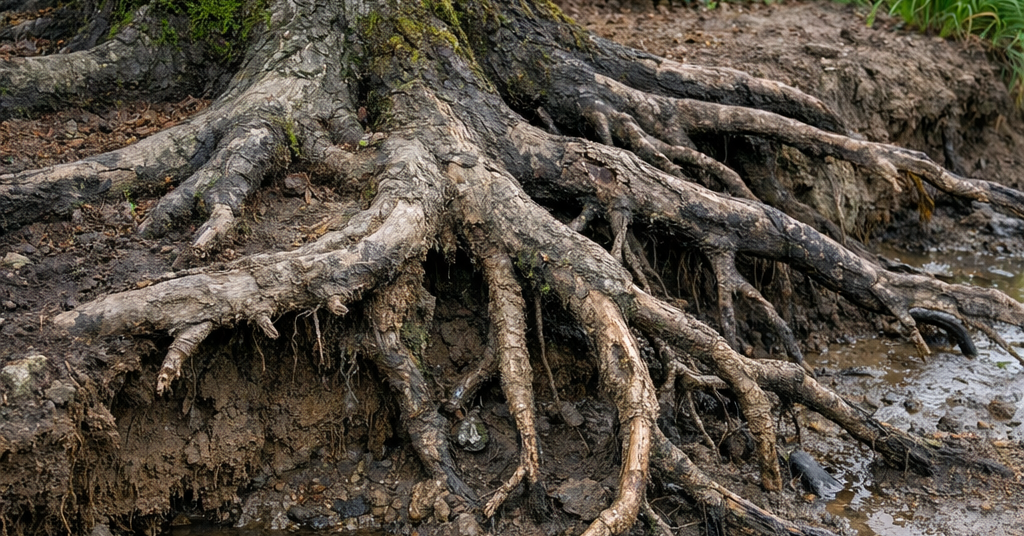
Poor Drainage and Root Suffocation
Poor drainage occurs when water cannot move through the soil effectively. This can be due to heavy clay soils, an underlying hardpan layer, or improper grading. Excessive moisture creates an anaerobic environment, making trees susceptible to Armillaria and Phytophthora root rot. According to WSU Extension, early symptoms include crown thinning and yellowing foliage, but by the time these appear, the structural root system may already be significantly decayed.
Nutrient Imbalance and Soil pH
The soil’s pH level, which measures its acidity or alkalinity, directly affects nutrient availability. Different trees prefer different pH ranges. When the pH is off, even if nutrients are present, the tree can’t absorb them. Similarly, a lack of essential nutrients or an imbalance can weaken a tree, making it more susceptible to stress, pests, and diseases. Soil structure, its composition of sand, silt, and clay, also plays a huge role in how well it drains and retains nutrients.
Top Causes of Tree Decline in Burlington
Burlington’s unique environment contributes significantly to the soil and drainage challenges many trees face. Our local climate and geological history have shaped the very ground beneath our feet, making certain issues more prevalent here than in other regions.
- High Clay Content Soils: Much of South Burlington, for instance, is characterized by soils with a high clay content. These soils were deposited by ancient Glacial Lake Washington. While clay soils are rich in nutrients, their fine particles can easily compact and hold too much water, leading to poor drainage and root suffocation, especially after heavy rains or snowmelt.
- Glacial Till and Alluvial Soils: Beyond clay, we also have glacial till soils in uplands, which can be dense and poorly drained in some areas. Alluvial soils, found near rivers like the Winooski, are generally fertile but can become waterlogged if the clay content is high, particularly in floodplain areas.
- Significant Annual Precipitation: Burlington receives significant annual precipitation, often exceeding 40 inches. This consistent moisture, combined with the city’s flat topography, means that without proper site grading or professional soil aeration, tree roots remain in a chronically saturated state. This consistent moisture, combined with slow-draining soils, can keep tree roots in a constantly saturated state, promoting root rot and other moisture-related diseases. Our winters also bring significant snowfall, averaging 86 to 97 inches, which can contribute to soil compaction as it melts and refreezes.
- Urban Development and Compaction: As Burlington continues to grow, construction activities, increased foot traffic, and vehicle parking often lead to severe soil compaction in residential and commercial areas. This reduces pore space in the soil, hindering water infiltration and air exchange critical for root health.
- Temperature Extremes: Burlington’s hot-summer humid continental climate means trees endure both warm, humid summers and freezing, snowy winters. These temperature swings can stress trees already struggling with poor soil conditions, making them more vulnerable to decline. For example, a sudden thaw followed by a deep freeze can cause issues in waterlogged soils.
DIY Solutions for Soil & Drainage Issues
While professional intervention is often necessary for severe issues, there are several steps Burlington homeowners can take to improve soil and drainage conditions around their trees.
- Improve Soil Aeration: Gently aerate the soil around the tree’s drip line using a garden fork. Be careful not to damage surface roots. This helps break up minor compaction and allows air and water to penetrate.
- Add Organic Matter: Incorporate 2-4 inches of organic compost or well-rotted mulch (keeping it a few inches away from the tree trunk) to the soil surface. This improves soil structure, enhances drainage in clay soils, and increases water retention in sandy soils.
- Adjust Watering Practices: Ensure you are watering deeply and infrequently, encouraging roots to grow deeper. Avoid overwatering, especially in poorly draining soils. Check soil moisture before watering.
- Create Berms or Swales: For areas with persistent surface water, consider gently re-grading the landscape to direct water away from the tree’s base. Creating small berms or shallow swales can help divert excess water.
- Avoid Compaction: Limit foot traffic, vehicle parking, and heavy equipment use under the tree’s canopy. Use stepping stones or designated paths to protect the root zone from further compaction.
- Monitor Soil pH: Purchase an inexpensive soil pH test kit from a local garden center. If the pH is significantly off for your tree species, you can try to adjust it with amendments like elemental sulfur (to lower pH) or lime (to raise pH), but do so cautiously and gradually.
Professional Solutions (How Earthworks Tree Service Handles It)
When DIY methods aren’t enough, or if you’re unsure about the underlying cause of your tree’s decline, it’s time to call in the experts. Professional arborists have the knowledge, tools, and experience to accurately diagnose and effectively treat complex soil and drainage problems. Earthworks Tree Service offers a range of specialized solutions tailored to the specific needs of your trees and the unique conditions of Burlington.
- Comprehensive Soil Testing and Analysis: We start with detailed soil tests to understand its composition, pH, nutrient levels, and compaction. This scientific approach allows us to pinpoint the exact issues affecting your trees.
- Deep Root Aeration: Using specialized equipment, we can inject high-pressure air into the soil to break up severe compaction without damaging roots. This creates channels for water, oxygen, and nutrients to reach the root system.
- Soil Amendments and Fertilization: Based on soil test results, we apply targeted amendments to correct pH imbalances and introduce essential nutrients through deep root fertilization. This promotes vigorous root growth and overall tree vitality.
- Drainage System Installation: For persistent waterlogging, we can design and install effective drainage solutions, such as French drains or specialized grading, to divert excess water away from the tree’s critical root zone.
- Root Collar Excavation: Sometimes, roots grow too close to the surface or are buried too deeply due to improper planting or soil buildup. We can carefully excavate the root collar to expose the root flare, allowing the tree to breathe properly and preventing girdling roots.
- Consultation and Long-Term Care Plans: Our certified arborists provide expert advice on long-term tree care, including proper mulching, watering schedules, and ongoing monitoring to prevent future soil and drainage issues in your Burlington landscape.
Burlington’s Unique Tree Challenges: A Local Angle
Burlington, Washington, is a city proud of its green spaces and urban forest, but maintaining tree health here comes with specific considerations. Our location along Lake Champlain means our climate is influenced by the lake effect, contributing to significant precipitation and varied temperatures. As discussed, the prevalence of clay-rich soils in areas like South Burlington makes drainage a recurring challenge. Beyond the natural elements, local regulations also play a role in tree care. The City of Burlington has by-laws governing tree removal and maintenance on both public and private property. For instance, removing a private tree 8 inches or greater in diameter often requires a permit, regardless of its health. These regulations are designed to protect our urban canopy, highlighting the importance of professional assessment when a tree is in decline due to soil or drainage issues. Understanding these local nuances is essential for effective tree care in our community.
Local Insight Section: Did You Know?
Did You Know? Burlington’s urban forest is home to a diverse array of tree species, from stately maples to resilient oaks, all of which must contend with the city’s unique soil profile and fluctuating weather patterns. The city actively manages its public trees, but private property owners play an equally vital role in maintaining the health of our collective green infrastructure. The health of a single tree can impact the entire local ecosystem, from providing shade and improving air quality to supporting local wildlife.
Expert Tip: When to Call a Professional Arborist
It’s easy to overlook subtle changes in your trees, but early detection of soil and drainage problems can save a tree from irreversible decline. If you notice any of the symptoms mentioned, such as persistent wilting, unusual leaf discoloration, or water pooling around the tree base, it’s time to act. Waiting too long can lead to more severe damage, making treatment more difficult and costly, or even necessitating tree removal. Pro tip from Earthworks Tree Service: A visual inspection of your trees and the surrounding soil at least once a month can help you spot issues early. If you’re unsure, or if DIY efforts aren’t yielding results, don’t hesitate to call an Isa- certified arborist. We have the expertise to diagnose the problem accurately and recommend the most effective solutions, helping your trees recover and thrive.
Frequently Asked Questions
What are the common signs of soil and drainage problems affecting trees?
Common signs include stunted growth, yellowing leaves, premature leaf drop, wilting even when watered, fungal growth at the base of the tree, and standing water around the root flare. These often point to roots struggling due to too much or too little oxygen.
Can I fix soil compaction around my trees myself?
While minor compaction can be improved by adding organic matter like compost, severe compaction usually requires professional intervention. Deep root aeration, which involves injecting air into the soil, is often needed to break up dense soil and allow roots to breathe.
How often should I water my trees in Burlington?
For most mature trees in Burlington, deep, infrequent watering is better than shallow, frequent watering. Aim for about one inch of water per week, including rainfall. Adjust based on recent precipitation and the specific needs of your tree species and soil type.
What is root rot, and how does it relate to drainage issues?
Root rot is a fungal disease that attacks tree roots, often caused by excessive soil moisture and poor drainage. Symptoms include wilting, discolored leaves, branch dieback, and a general decline in tree health. It can be difficult to treat once advanced.
Do I need a permit to remove a tree affected by soil issues in Burlington?
The City of Burlington has specific regulations for tree work. A permit is required to remove or significantly injure private trees 8 inches or greater in diameter. Removing multiple smaller trees may also require a permit. For more details on tree removal services and local requirements, please visit our tree removal service page.
Can Burlington’s heavy snowfall impact soil compaction around trees?
Yes, heavy snowfall can contribute to soil compaction, especially when snow melts and refreezes, or when it’s repeatedly walked on. The weight of snow can also compact the soil beneath, reducing oxygen availability to tree roots once it melts.
Protect Your Trees by Tackling Soil and Drainage Issues Early
Addressing soil and drainage issues is crucial for the long-term health of your trees in Burlington. By understanding the unique challenges of our local environment, you can take proactive steps to protect your green investments. Whether it’s improving soil structure, managing water flow, or diagnosing complex root problems, professional help can make all the difference. Don’t let your trees suffer in silence. Ready to get started? Contact Earthworks Tree Service today for a comprehensive assessment and tailored solutions for your Burlington property. Visit https://earthworkstreeservice.com/ to learn more about how we can help your trees thrive.