
March 30, 2026
Are your trees ready to withstand the next Pacific Northwest storm? Weak branches and poor tree structure aren’t just an eyesore; they pose significant safety risks and can lead to costly property damage. Structural pruning offers a proactive solution, building resilient trees from the ground up. This specialized approach, performed by expert arborists, ensures your trees develop a robust framework, enhancing their health, longevity, and ability to endure our region’s challenging climate.
Key Takeaways
- Structural pruning builds a strong tree framework, reducing future storm damage and disease risk.
- ISA-Certified Arborists apply precise techniques to encourage a dominant central leader and healthy branch spacing.
- Professional structural pruning follows the ANSI A300 Tree Care Standards, which were consolidated in 2024 to provide a unified scientific approach. These standards prohibit harmful practices like ‘lion’s tailing’ and ‘topping,’ focusing instead on apical dominance and proper branch aspect ratios.
- Local regulations in Bellingham, Whatcom, and Skagit Counties often require permits for major tree work, emphasizing professional compliance.
- The cost of structural pruning is an investment in safety and long-term tree health, typically ranging from $200-$800 per tree.
- Choosing a professional arborist prevents common mistakes like ‘topping’ and ensures proper care for your specific tree species and local conditions.
What is Structural Pruning?
Structural pruning is a specialized tree care practice focused on developing a strong, sustainable framework for a tree, ideally initiated when the tree is young. Unlike general trimming, which often addresses aesthetics or clearance, structural pruning aims to correct or prevent structural defects that could lead to limb failure or overall tree decline. It involves the selective removal or reduction of branches to establish a dominant central leader, improve branch spacing, and strengthen branch attachments. This method ensures the tree grows with inherent strength and resilience, crucial for enduring the Pacific Northwest’s often harsh weather. Understanding the core principles helps clarify why this technique is so effective and different from basic trimming.
- Establish a Strong Central Leader: Encouraging one main stem to grow vertically, acting as the tree’s backbone.
- Maintain Proper Branch Spacing: Ensuring branches are well-distributed along the trunk, preventing weak points where multiple branches emerge too closely.
- Promote Wide Branch Angles: Removing branches with narrow, ‘V-shaped’ crotches prone to splitting, favoring ‘U-shaped’ attachments.
- Manage Co-dominant Stems: Identifying and reducing the size of competing leaders to prevent double trunks that can split apart.
- Remove Defective Branches: Eliminating dead, diseased, or crossing branches that compromise the tree’s health and structure.
Structural vs. General Pruning: A Key Distinction
| Feature | Structural Pruning | General Pruning (Trimming / Thinning) |
| Primary Goal | Develop a strong and resilient framework that prevents structural defects. | Maintain appearance, clear obstructions, remove dead wood, and manage canopy size. |
| Timing (Ideal) | Usually performed when trees are young during the dormant season, though corrective work can continue as trees mature. | The dormant season is best for major work. Light trimming can occur throughout the year. |
| Focus | Establish a central leader, correct branch spacing, and manage co-dominant stems. | Outer canopy shaping, limb clearance, and basic hazard reduction. |
| Technique | Precise reduction and removal cuts that guide long-term growth patterns. | Removal of small branches, deadwood, and simple canopy size reduction. |
| Long-term Impact | Improves structural stability, increases longevity, and reduces storm damage risk. | Maintains appearance and short-term safety but may cause structural problems if done incorrectly. |
| Expertise Required | Advanced arboriculture knowledge is usually performed by ISA-Certified arborists. | Basic pruning knowledge. Professional service recommended for larger trees. |
Why Structural Pruning Matters in Northwest Washington
In Bellingham, Mount Vernon, and across Whatcom and Skagit Counties, our trees face unique challenges, making structural pruning a vital service. The specific climate factors and local regulations demand a tailored approach to tree care that only experienced arborists can provide.
Protecting Your Trees from PNW Challenges
The Pacific Northwest’s climate, characterized by heavy rainfall and strong winds, can significantly impact tree health and stability. Structural pruning directly addresses these environmental stressors.
- Strong Winds and Storms: Coastal communities and open areas experience intense winds that can snap weak limbs or topple dense-canopied trees. Structural pruning reduces sail area and strengthens the tree’s core to resist these forces.
- Heavy Rainfall and Saturated Soil: Prolonged wet conditions can lead to saturated soil, reducing root stability. Trees with a strong, balanced structure are less likely to lean or uproot when the ground becomes soft.
- Fungal Diseases: Proper airflow is your first defense against regional pathogens. The Washington State Department of Natural Resources (DNR) provides ongoing monitoring for fungal threats and invasive pests that thrive in our damp climate, many of which can be mitigated through strategic canopy thinning.
- Pest Infestations: Healthy, structurally sound trees are more resilient to pests such as the Bronze Birch Borer. Pruning removes weak or stressed wood that can attract these damaging insects.
Navigating Local Tree Regulations
| Jurisdiction | Regulation Summary | Key Action |
| Bellingham, WA | Street Tree Permit is often required for major pruning or removal on public property. Tree topping is generally unlawful. Under the Bellingham Landmark Tree Ordinance (extended through September 2026), any healthy tree with a trunk diameter of 36 inches or greater is protected. While removal requires a permit and can carry fines up to $5,000, normal pruning and maintenance in compliance with ANSI A300 standards is explicitly allowed without a permit. | Check with the local municipality |
| Whatcom County, WA | Residents within the Lake Whatcom, Lake Samish, and Lake Padden watersheds must adhere to strict canopy retention rules. A Tree Removal Permit is required for any ‘Significant Tree’, defined as an evergreen 12 inches or greater DBH, or a deciduous tree 8 inches or greater DBH, to minimize stormwater impacts on these sensitive water bodies. | Check with the local municipality |
| Skagit County, WA | Specific pruning regulations vary by jurisdiction. Proper pruning is encouraged to reduce storm damage and maintain tree health, often aligning with county natural resource management policies. | Check with the city or county planning department |
The Benefits of Proactive Structural Pruning
The advantages of structural pruning extend far beyond immediate aesthetic improvements. This proactive approach delivers significant long-term benefits for both your trees and your property.
Enhancing Tree Longevity and Safety
By strategically shaping a tree’s growth, structural pruning directly contributes to its strength and resilience.
- Reduced Risk of Storm Damage: Trees with strong structures are less likely to suffer limb breakage or uprooting during heavy winds, ice storms, or snow accumulation.
- Improved Tree Health: Removing weak, diseased, or crossing branches enhances air circulation and light penetration, promoting overall vigor and reducing susceptibility to pests and diseases.
- Extended Lifespan: A well-structured tree is a healthier tree, capable of thriving for decades longer than one prone to structural failures.
- Enhanced Safety: Minimizing the risk of falling limbs protects people, pets, and property from potential harm.
Boosting Property Value and Curb Appeal
Healthy, well-maintained trees are not just beautiful; they are a tangible asset that can significantly boost your property’s market appeal and value.
- Increased Property Value: Studies show that mature, well-cared-for trees can increase property value by 3-15%, with some reports indicating returns of 100% or more on tree landscaping investments.
- Enhanced Aesthetics: Structurally sound trees possess a natural, graceful form that greatly improves the visual appeal of any landscape.
- Faster Home Sales: Properties with established, healthy trees often sell more quickly and for higher prices, making them a wise investment for homeowners.
When is the Best Time for Structural Pruning?
The best time to perform structural pruning depends on the tree species and its growth cycle, but generally, late winter to early spring is ideal for many trees in our region. During this dormant period, the tree’s structure is fully visible without leaves, allowing for precise cuts. Also, the tree is less susceptible to pests and diseases, and it can heal more efficiently as it enters its active growth phase. However, corrective pruning for hazardous limbs may be necessary at any time of year.
- Late Winter to Early Spring: Ideal for most deciduous trees before bud break.
- Summer: Can be suitable for some species, particularly to slow growth on specific branches.
- Fall: Generally avoided as it can stimulate new growth vulnerable to winter damage.
The Structural Pruning Process: What to Expect from Earthworks Tree Service
Structural pruning is a meticulous process that demands expertise and a deep understanding of tree biology. When you choose Earthworks Tree Service, you’re partnering with ISA-Certified Arborists who follow industry best practices for optimal tree health and safety.
Assessment and Planning
Every effective structural pruning project begins with a thorough evaluation of your tree’s current condition and growth patterns.
- Initial Consultation: Our ISA-Certified Arborists will visit your property to assess the tree’s species, age, health, and current structural integrity.
- Identifying Goals: We discuss your objectives, whether it’s preventing future hazards, improving aesthetics, or managing growth near structures.
- Developing a Pruning Plan: A detailed plan outlines which branches will be removed or reduced, focusing on establishing a strong central leader and correcting structural flaws.
Precision Pruning Techniques
Precision is key in structural pruning. Our team uses specialized techniques to ensure every cut benefits the tree’s long-term health.
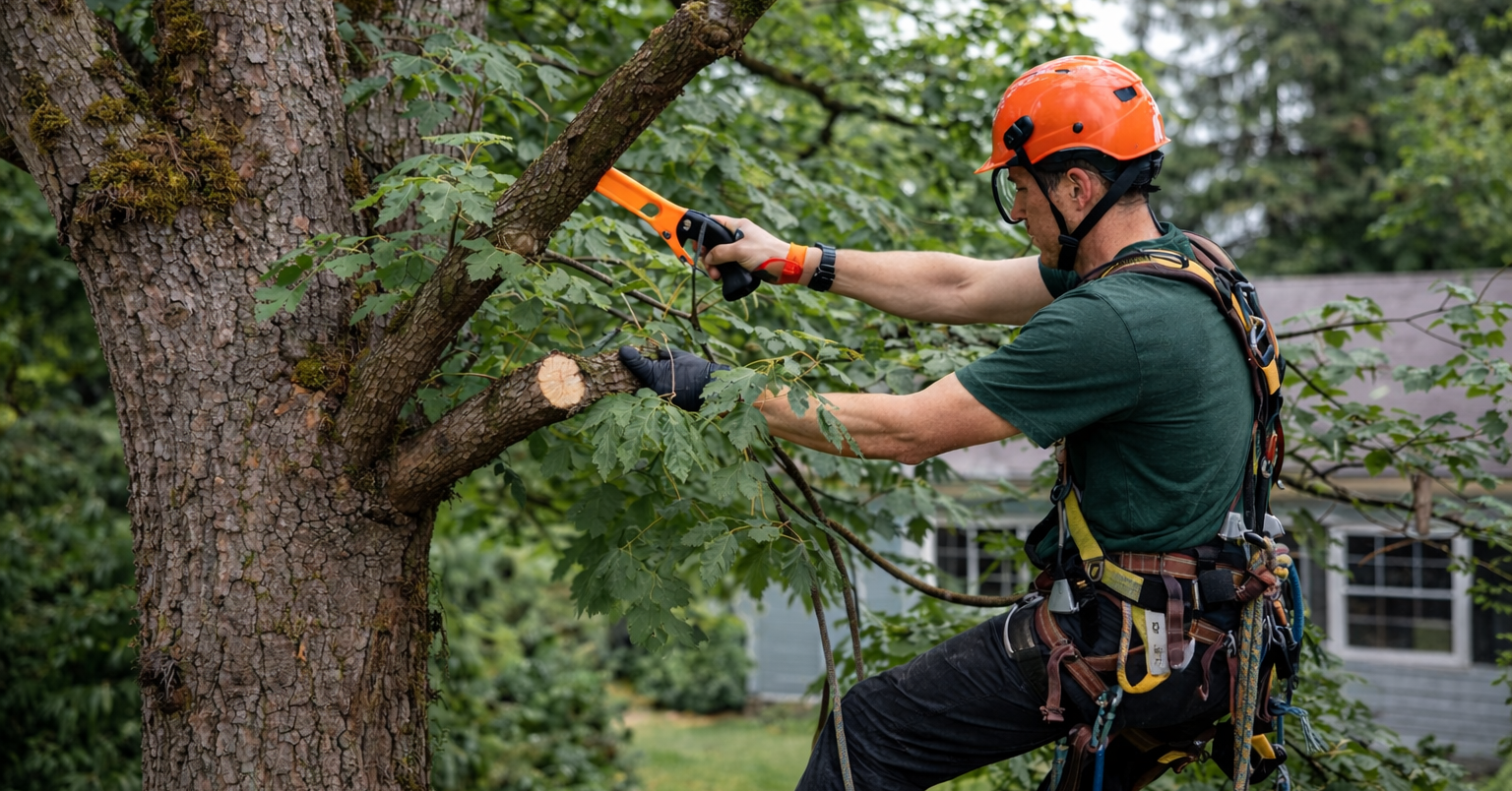
- Targeted Branch Removal: Eliminating competing leaders, crossing branches, and those with weak attachments.
- Reduction Cuts: Shortening branches to reduce weight and encourage desired growth direction without ‘topping’ the tree.
- Thinning: Selectively removing branches to improve light penetration and air circulation within the canopy.
- Proper Cut Placement: Making clean cuts at the branch collar to facilitate rapid healing and prevent disease entry.
Post-Pruning Care and Follow-up
Our commitment to your trees extends beyond the initial pruning. We ensure your trees are set up for continued success.
- Site Cleanup: We ensure your property is left clean and tidy, removing all pruned material.
- Healing and Growth Advice: Our arborists provide guidance on post-pruning care to support the tree’s recovery and new growth.
- Future Maintenance Recommendations: We offer advice on ongoing care to maintain the tree’s structural integrity and health for years to come.
Structural Pruning Costs
Understanding the investment required for structural pruning helps you make an informed decision. While costs vary, the long-term benefits far outweigh the initial expense.
Factors Influencing Structural Pruning Costs
| Factor | Impact on Cost |
| Tree Size and Age | Larger and more mature trees with wide canopies require more labor, time, and specialized equipment, which increases pruning costs. |
| Tree Species | Different species grow differently. Dense wood, rapid growth, or complex branching patterns can make pruning more time-intensive. |
| Tree Health and Condition | Trees with decay, disease, or structural problems require more careful pruning techniques and safety precautions. |
| Accessibility | Trees located near homes, power lines, fences, or in tight spaces require extra safety equipment and rigging. |
| Number of Trees | Pruning several trees at once can reduce overall cost because crews and equipment are already on site. |
| Time of Year | Emergency pruning after storms or outside normal scheduling periods may increase pricing. |
DIY Structural Pruning vs. Professional Arborist Services
When it comes to structural pruning, the choice between attempting it yourself or hiring a professional arborist is clear. This isn’t a task for amateurs; the long-term health and safety of your trees depend on expert knowledge and execution.
| Feature | DIY Structural Pruning | Professional Arborist (Earthworks Tree Service) |
| Expertise & Knowledge | Limited understanding of tree biology, growth patterns, and correct pruning methods. | ISA Certified arborists trained in tree science, structural pruning, and proper pruning techniques. |
| Safety Risks | High risk of injury from falls, tools, or unstable branches. Limited safety equipment. | Trained crews using professional safety gear and insurance protection. |
| Equipment | Basic tools such as hand saws or pole pruners. | Professional equipment, including chainsaws, lifts, climbing systems, and wood chippers. |
| Long Term Tree Health | Improper cuts or over-pruning can weaken the tree and increase disease risk. | Correct pruning improves structure, health, and long-term stability. |
| Local Regulations | Homeowners may be unaware of permit requirements or tree protection laws. | Familiar with local tree ordinances and permit requirements in Whatcom and Skagit Counties. |
| Cost vs Value | Lower upfront cost but higher long-term risk of damage, disease, or removal. | Higher initial investment that prevents costly problems and protects property value. |
Common Structural Pruning Mistakes to Avoid
Attempting structural pruning without the necessary knowledge often leads to practices that severely harm trees, rather than strengthening them. Avoiding these common mistakes is crucial for your tree’s survival and health.
The Dangers of Topping and Improper Cuts
One of the most damaging practices is ‘topping,’ where a tree’s main branches are cut back to stubs. This is not structural pruning; it’s tree mutilation.
- Weak Regrowth: Topping causes rapid, weak, upright shoot growth that is prone to breaking, creating a hazardous tree.
- Increased Disease and Pest Susceptibility: Large, open wounds from topping are entry points for pathogens and insects.
- Starvation and Stress: Removing too much canopy reduces the tree’s ability to photosynthesize, leading to stress and potential death.
- Unsightly Appearance: Topped trees develop an unnatural, unattractive form.
- Improper Cut Placement: Cuts made too close to the trunk (flush cuts) or leaving long stubs can hinder healing and invite decay.
- Over-Pruning (Lion’s Tailing): Removing too many interior branches leaves only foliage at the ends, making branches weak and susceptible to breakage.
Choosing the Right Arborist for Structural Pruning
Choosing the right arborist is the most important decision you’ll make for your tree’s structural health. Look for credentials, experience, and a commitment to best practices.
Why Earthworks Tree Service Stands Out
When entrusting your trees to a professional, you want to ensure they possess the highest level of expertise and adhere to strict safety and quality standards.
- ISA-Certified Arborists: Our team includes ISA-Certified Arborists, ensuring that all structural pruning is performed according to the highest industry standards and scientific understanding of tree care. This certification is a badge of expertise and ongoing education.
- Local Expertise: Operating in Bellingham and Mount Vernon, we have an intimate understanding of the specific tree species, climate challenges, and local regulations throughout the Whatcom and Skagit County Areas.
- Safety First: Tree work is inherently dangerous. We prioritize safety for our crew, your property, and your family, adhering to rigorous safety protocols and maintaining comprehensive insurance.
- Transparent Communication: We provide clear, documented estimates and keep you informed throughout the entire process, from initial assessment to post-pruning cleanup.
- Comprehensive Services: Beyond structural pruning, Earthworks Tree Service offers a full range of tree care, including tree removal, trimming, stump grinding, and 24/7 emergency services. You can learn more about our comprehensive offerings by visiting Earthworks Tree Service.
- Commitment to Tree Health: Our goal isn’t just to prune, but to foster the long-term health and vitality of your trees, enhancing their beauty and resilience for years to come. For a free estimate or to discuss your tree care needs, please don’t hesitate to Contact Us.
Frequently Asked Questions
What is the main difference between structural pruning and regular tree trimming?
Structural pruning focuses on developing a strong framework for a tree, often when it’s young, by removing or shortening branches that compete with the central leader or form weak attachments. This prevents future structural defects, reduces storm damage risk, and extends the tree’s lifespan.
When is the ideal time of year to perform structural pruning?
The best time for structural pruning in the Pacific Northwest is typically late winter or early spring, before new growth begins. This allows for clear visibility of the tree’s structure and promotes quick healing. However, minor corrective pruning can often be done any time of year.
Do I need a permit for structural pruning in Whatcom or Skagit County?
Yes, in many local areas like Bellingham and parts of Whatcom County, permits are required for major pruning or removal of trees, especially street trees or ‘Significant Trees.’ Always check with your local municipality before starting any major tree work.
Can I perform structural pruning myself, or do I need an arborist?
While DIY pruning might seem cost-effective for small branches, structural pruning requires specialized knowledge of tree biology and growth patterns. Incorrect cuts can cause irreversible damage, disease, and compromise the tree’s stability, making professional arborists essential.
What is the typical cost for professional structural pruning services?
The cost of structural pruning varies widely based on tree size, species, health, accessibility, and the arborist’s rates. Generally, you can expect costs to range from $200 to $800 per tree, with larger or more complex jobs potentially exceeding this. Always get a detailed estimate.
How does structural pruning help prevent storm damage?
Structural pruning significantly reduces the risk of limb failure and storm damage by strengthening the tree’s architecture. It minimizes co-dominant stems and weak branch attachments, making the tree more resilient to heavy winds and ice, which are common in the PNW.
Why is it important to hire an ISA-Certified Arborist for structural pruning?
An ISA-Certified Arborist possesses extensive knowledge in tree biology, health, and proper pruning techniques. This certification ensures they adhere to industry best practices, making them uniquely qualified to perform structural pruning that promotes long-term tree health and safety.
Conclusion
Structural pruning is an essential, long-term investment in the health, safety, and value of your trees. Protect your property and ensure your trees stand strong against the elements. Contact Earthworks Tree Service today for expert structural pruning from ISA-Certified Arborists in Bellingham, Mount Vernon, and across Whatcom and Skagit Counties.