

January 16, 2026
Bellingham’s winters can be unpredictable. One week, it’s drizzling and mild. Next, you’re dealing with frost, windstorms, and freezing rain. For trees, that mix of cold, wet, and wind can cause serious stress if they’re not properly cared for. Whether you’re managing a residential landscape or a commercial property, preparing your trees for winter helps prevent breakage, disease, and costly removals come spring.
Why Winter is Hard on Trees in Bellingham
The Pacific Northwest climate is unique. Bellingham’s combination of mild temperatures, heavy rainfall, and occasional deep freezes makes winter tricky for both evergreen and deciduous trees.
- Wind exposure: Gusty coastal winds can dry out branches and uproot shallow-rooted trees.
- Freezing rain and ice: Layers of ice add weight that can snap limbs or split trunks.
- Saturated soil: Constant moisture weakens roots and reduces oxygen in the soil.
- Cold stress: Sudden temperature drops cause bark cracks and cellular damage, especially in young trees.
Understanding these stressors is the first step in protecting your landscape.
Step 1: Inspect Trees Before the Cold Sets In
Late fall is the ideal time to walk your property and assess your trees. Look for signs of weakness or damage that could worsen during winter.
What to Check
- Cracks or splits in major limbs or trunks
- Dead or hanging branches that could fall in a storm
- Dense canopies that trap snow and ice
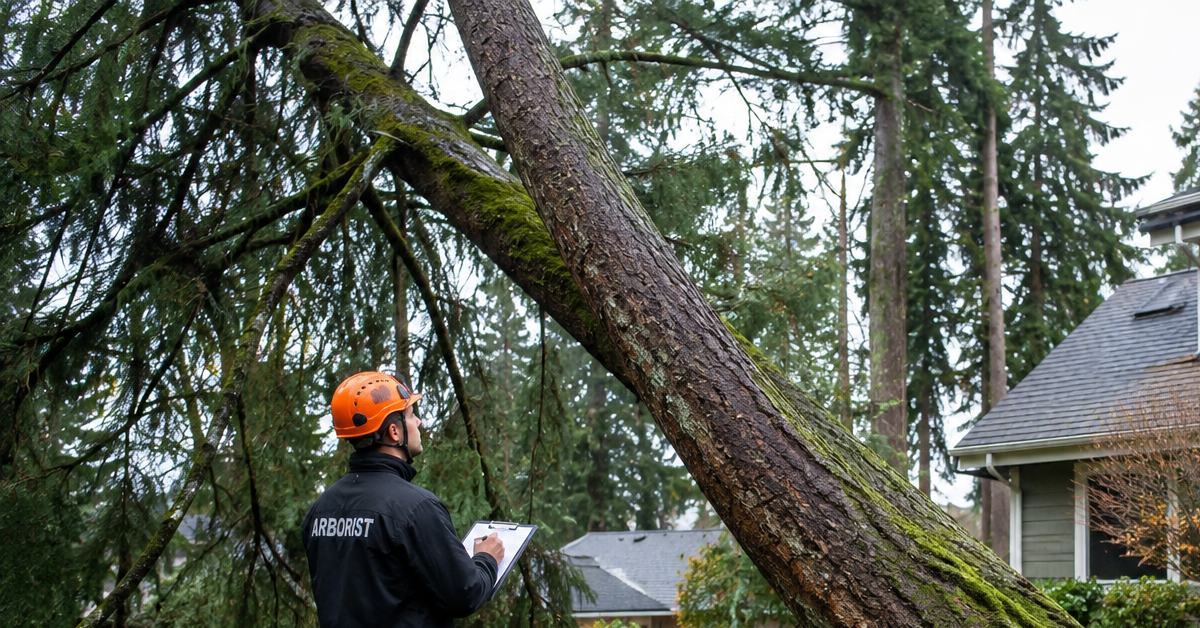
- Leaning trees that may indicate root instability
If you find these issues, schedule corrective pruning or a professional inspection before freezing weather arrives.
Step 2: Prune Trees for Winter Safety and Strong Spring Growth
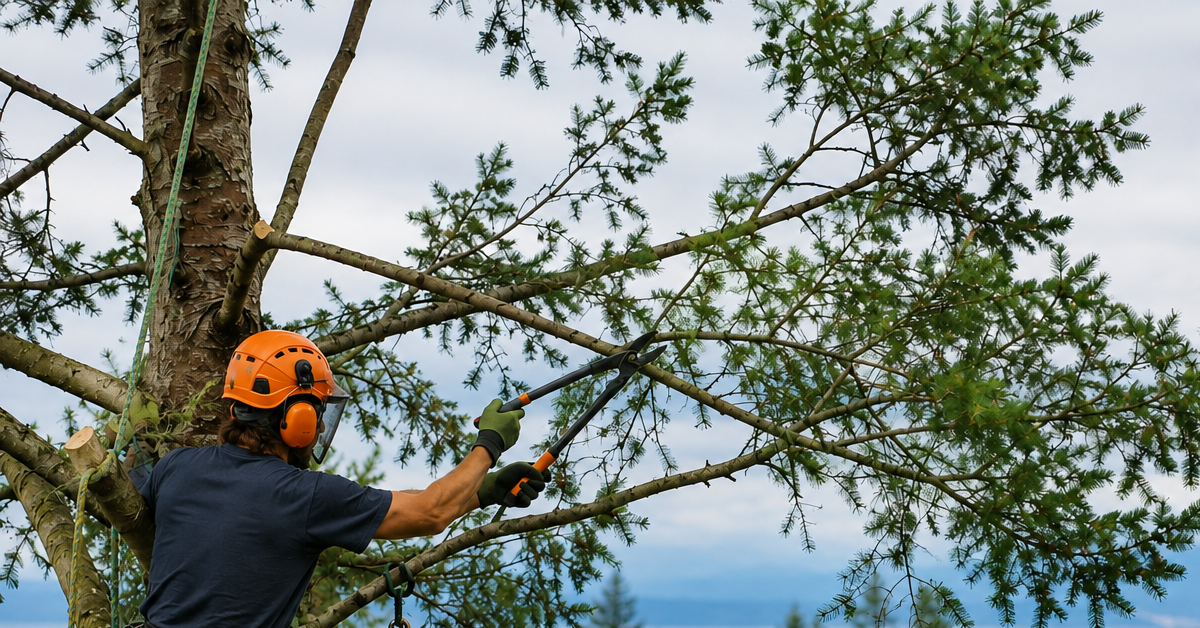
Winter pruning helps trees handle storms better and reduces hazards around your property. In Bellingham, it’s best to prune in late fall or early winter, once trees have gone dormant but before hard freezes.
Why Pruning Matters in Winter
- Removes weak or diseased limbs before they break under snow or wind.
- Improves air flow and light penetration for healthier spring growth.
- Helps balance canopy weight to prevent limb failure.
What to Prune
- Crossing or rubbing branches
- Deadwood and storm-damaged limbs
- Low-hanging branches near roofs, power lines, or walkways
Avoid over-pruning. Removing too much at once can stress trees just as temperatures start to drop.
Step 3: Insulate Roots with Mulch to Prevent Winter Damage
Mulching is one of the simplest, most effective ways to help trees survive winter. In Bellingham’s soggy climate, mulch acts as insulation and moisture control.
How to Mulch Properly
- Use organic materials like wood chips, bark, or compost.
- Spread 2–4 inches deep around the tree’s base.
- Keep mulch a few inches away from the trunk to prevent rot.
Mulch keeps soil temperature consistent and prevents nutrient leaching from rain.
Step 4: Water Before the Freeze
Many assume trees don’t need water in winter, but that’s a mistake. Evergreen trees especially continue to lose moisture through their needles. If the soil is dry before freezing, roots can suffer from dehydration.
When and How to Water
- Water deeply in late fall if there hasn’t been consistent rain.
- Focus on newly planted or young trees with less-established roots.
- Stop watering once the ground freezes or becomes saturated.
In Bellingham, winters are wet, but a few dry weeks before a cold snap can leave the soil too dry to buffer roots.
Step 5: Protect Tree Trunks from Frost and Sunscald
You might not think of Bellingham as a place where frost cracks or sunscald are common, but fluctuating temperatures can cause bark to expand and contract rapidly, leading to splits.
How to Prevent Bark Damage
- Wrap young or thin-barked trees (like maples and cherries) with tree wrap or burlap.
- Use light-colored materials to reflect sunlight.
- Start from the base and wrap up to the lowest branches.
Remove wraps in early spring once temperatures stabilize.
Step 6: Prevent Wind Damage During Bellingham’s Winter Storms
Strong winter winds are common near Bellingham Bay. Trees planted in exposed areas need extra support.
For Young or Shallow-Rooted Trees
- Stake trees loosely to allow natural movement but prevent tipping.
- Check ties regularly and adjust if they’re too tight.
- Use a flexible material that won’t cut into bark.
For Mature Trees
- Thin dense canopies to let wind pass through.
- Remove dead limbs that can become projectiles.
If a large tree leans or the soil lifts around its base, call a certified arborist right away to assess root stability.
Step 7: Manage Snow and Ice Safely
Ice and snow buildup can quickly turn a healthy tree into a hazard. The key is handling it safely and correctly.
What to Do (and Not Do)
- Do gently brush off snow from small branches with a broom.
- Don’t shake branches covered in ice. Wait until it melts naturally.
- Do clear paths around trees to prevent compacted snow from smothering roots
Never pour salt-based ice melt near trees. Use calcium magnesium acetate instead; it’s gentler on roots and soil.
Step 8: Watch for Winter Pests and Diseases
Cold doesn’t kill all pests. In fact, some insects and fungi thrive during mild Pacific Northwest winters.
Common Winter Threats in Bellingham
- Root rot fungi in oversaturated soil
- Scale insects on evergreen needles and bark
- Aphid eggs overwinter on branches
Prevention Tips
- Prune infected limbs before winter.
- Keep mulch layers moderate to discourage pests.
- Use dormant oil sprays on fruit trees and ornamentals in late winter.
Regular monitoring helps you catch problems before they spread in the spring.
Step 9: Care for Evergreen Trees
Evergreens are a signature part of the Northwest landscape, but they’re not immune to winter stress. They lose moisture through their needles year-round.
Evergreen Winter Care Tips
- Water deeply before freezing weather.
- Apply mulch to regulate soil temperature.
- Spray with anti-desiccant (anti-dryness) products if your site is exposed to wind.
If needles start browning or dropping midwinter, that’s often windburn or dehydration, not disease.
Step 10: Protect Young and Newly Planted Trees
Young trees have small root systems that can’t store enough energy to handle freezing weather on their own.
Winter Protection Checklist for New Trees
- Add 3–4 inches of mulch over the root zone.
- Wrap trunks to prevent frost cracks.
- Stake if the area is windy.
- Avoid fertilizing until spring.
Give young trees a deep watering before the first hard freeze. It strengthens roots for dormancy.
Step 11: Prepare Trees for Bellingham’s Winter Storms
Bellingham’s winter storms can come with high winds, sleet, and freezing rain. Prevent damage by preparing early.
Before a Storm
- Secure outdoor items that could hit trees.
- Check for hanging or damaged branches.
- Avoid pruning right before a heavy freeze.
After a Storm
- Inspect trees for cracks, splits, or leaning.
- Keep clear of downed power lines.
- Call a certified arborist for damaged large trees.
Attempting to remove broken limbs from tall trees on your own can be dangerous. Always hire a professional for storm cleanup.
Step 12: Maintain Tree Health Year-Round in the Pacific Northwest
Winter care doesn’t stop once the first frost hits. Trees that enter dormancy in strong condition bounce back faster when spring returns.
Ongoing Practices
- Schedule annual inspections with a certified arborist.
- Maintain healthy soil with compost and organic mulch.
- Keep an eye on drainage during the wet months.
Healthy trees withstand stress better than neglected ones.
Step 13: Prepare Landscape Around Trees
Winter tree protection extends beyond the trunk and canopy. The surrounding landscape affects how trees absorb water, resist frost, and anchor during storms.
Ground and Soil Preparation
- Grade soil to improve drainage and avoid standing water near roots.
- Plant groundcover such as native ferns or low shrubs to shield roots from erosion.
- Keep rock or mulch borders several inches from trunks to prevent moisture buildup.
Maintenance Tip
Inspect nearby irrigation or downspout systems. Redirect water flow away from the base of trees to prevent root suffocation during heavy rainfall.
Step 14: Create a Long-Term Winter Tree Care Plan
Instead of reacting each year, create a long-term care plan tailored to Bellingham’s conditions.
Seasonal Checklist
- Fall: Inspect structure, prune, mulch, and water deeply.
- Winter: Monitor for damage, pests, and soil saturation.
- Spring: Remove wraps, adjust mulch, and check regrowth.
Working with a certified arborist to maintain yearly inspections ensures your trees stay strong through every season. Consistent attention means fewer emergencies, lower costs, and healthier trees for decades to come.
Common Questions About Winter Tree Care in Whatcom County
Should I wrap every tree for winter?
No. Only wrap young, thin-barked, or recently planted trees. Established trees with thick bark usually don’t need it. Use breathable material like burlap or tree wrap tape to prevent sunscald and cracking.
How often should I water my trees in winter?
Water only during dry spells before the ground freezes. Overwatering can suffocate roots in Bellingham’s clay-heavy soil. Newly planted trees need one deep watering every 3–4 weeks when temperatures are above freezing.
Can I prune trees in the middle of winter?
Yes, but timing matters. Prune only when temperatures stay above freezing and the tree is fully dormant. Skip pruning during frost or wet weather moisture can invite fungal infection and slow healing..
What should I do if a branch breaks under the snow?
Remove hanging debris carefully once the ice melts. Never yank frozen branches; they can split deeper into the trunk. If a large limb tears bark or exposes wood, call a certified arborist for proper wound care and risk assessment.
How do I know if my tree is dead after winter?
Wait until mid-spring to check. Scratch a small section of bark with your fingernail. If the layer underneath is green, the tree is alive. If it’s brown and brittle throughout, it may need professional evaluation or removal.
What trees need the most winter protection in the Pacific Northwest?
Young maples, birches, cherries, and fruit trees are more vulnerable to frost cracking and sunscald. Evergreen species like cedar and Douglas fir are hardier but still benefit from mulch and wind protection.