
August 26, 2026
Key Takeaways
- Northwest Washington’s near-constant moisture creates ideal conditions for wood-decaying fungi to establish inside trees, often without obvious outward symptoms.
- Tree rot frequently develops from the inside out, meaning a tree can look structurally sound while its core has already lost significant strength.
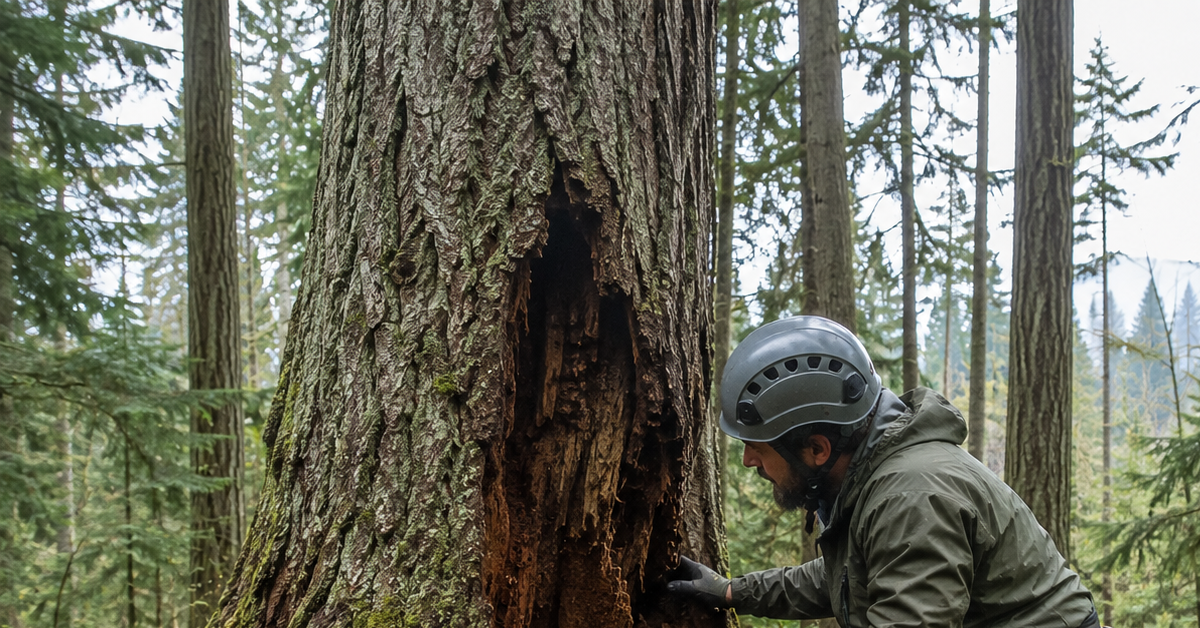
- Certain visible clues, including fungal growth, cavities, and bark abnormalities, can signal advanced internal decay that warrants a professional inspection.
- Trees near homes, driveways, and walkways in Bellingham and Skagit County deserve extra scrutiny because a hidden rot failure in those locations carries greater consequences.
- Earthworks Tree Service offers ISA-certified evaluations and reporting to help property owners identify decay risks before they become emergencies.
Northwest Washington’s mild, wet climate is part of what makes the region’s forests so lush, but that same moisture is also what makes tree rot such a persistent and often invisible hazard here. Unlike a cracked limb or a dead branch that announces itself, decay usually develops quietly inside a tree’s trunk or major limbs, sometimes for years, before it ever produces an outward sign.
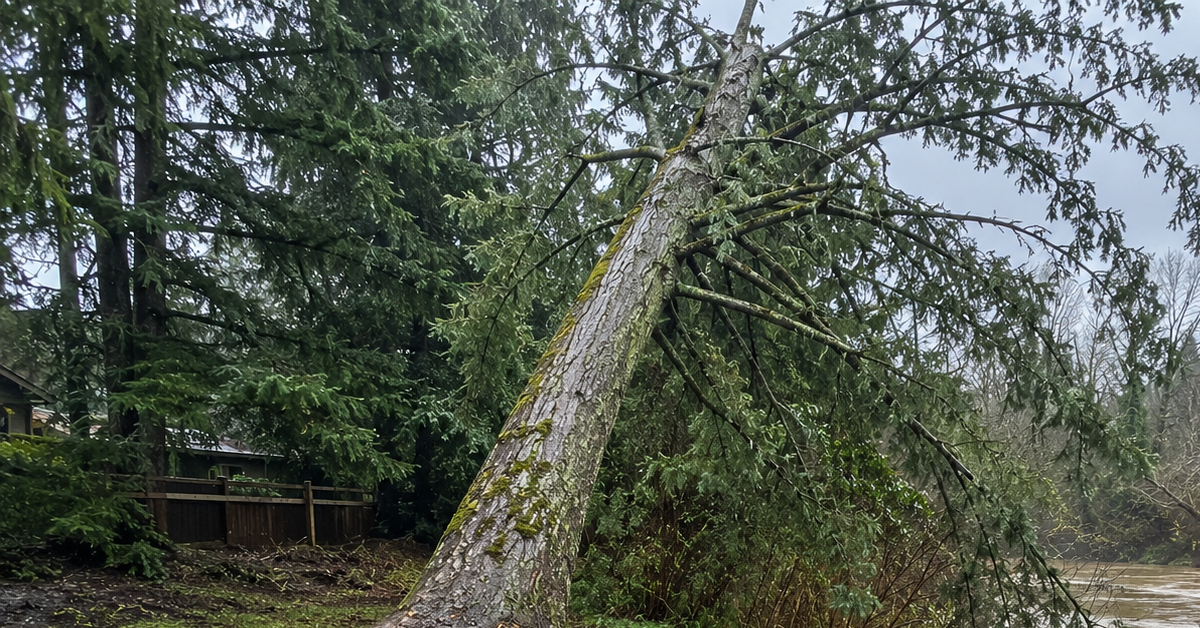
By the time a rotted tree fails, it can come down with very little warning, which is exactly why understanding how rot develops matters for anyone with mature trees on their Bellingham or Skagit County property.
Why the Pacific Northwest Climate Is Especially Prone to Rot
Wood-decaying fungi need moisture and a way into the tree’s internal tissue to establish themselves, and Northwest Washington provides both in abundance. The region’s extended rainy season keeps humidity and soil moisture elevated for much of the year, creating conditions that many decay fungi thrive in.
Add in the area’s mild temperatures, which rarely get cold enough to slow fungal activity the way a harsher winter climate would, and you get a longer window each year during which decay organisms can actively spread through a tree’s wood. Fungi typically gain entry through wounds, whether from storm damage, old pruning cuts that weren’t properly made, insect boring, or mechanical damage from construction or landscaping equipment. Once inside, decay fungi break down the wood’s structural fibers, and in a consistently damp climate like Bellingham’s or Skagit County’s, that process can continue largely unchecked for years.
How Rot Develops From the Inside Out
One of the most important things to understand about tree rot is that it often starts in the heartwood, the dead, structural core of the trunk, and works outward. Because the heartwood doesn’t carry water and nutrients the way the outer sapwood does, a tree can continue producing healthy leaves, growing new wood, and looking entirely normal from the outside while a significant portion of its structural core is being hollowed out by decay.
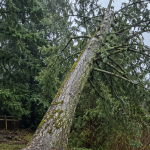
This is why a tree can seem perfectly healthy right up until a storm, a heavy snow load, or even just its own weight causes a sudden failure. The canopy might have looked fine the week before, but the trunk had already lost much of the structural strength it needed to withstand normal stress.
Visible Signs of Internal Decay
While rot itself is often hidden, it does tend to leave clues on the outside for those who know what to look for:
- Fungal fruiting bodies: Mushrooms, shelf-like conks, or bracket fungi growing on the trunk or at the base are some of the clearest external signs that decay may be present inside the wood.
- Cavities or hollow-sounding sections: These may sometimes be detected by tapping the bark and comparing the sound with nearby solid wood.
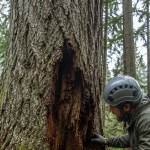
- Bulging, cracked, or peeling bark: A localized area of abnormal bark can indicate that the wood underneath is no longer structurally stable.
- Dead or thinning canopy sections: Canopy decline without an obvious external injury can point to internal vascular or root decay affecting water transport.
- Excessive moss or lichen: Concentrated growth in one section of the trunk can sometimes indicate an area where bark and wood are retaining unusual moisture.
None of these signs alone confirms how far decay has progressed. A professional inspection, sometimes including resistance drilling or sonic tomography, can provide a more reliable assessment of the tree’s internal condition.
Which Trees Are Most at Risk
Older, larger trees are generally more susceptible to significant rot simply because they’ve had more time and more opportunities for decay fungi to enter through old wounds, storm damage, and past pruning cuts.
Species common throughout Whatcom and Skagit counties, including bigleaf maple, red alder, and some conifers, have their own typical decay patterns and vulnerable points. This makes species-specific knowledge important when assessing tree health and structural risk.
Trees that have experienced previous storm damage, improper pruning, or root disturbance from nearby construction can also be at elevated risk because these events create openings that allow decay fungi to enter.
Why Rot Near Structures Deserves Extra Attention
A rotted tree in a wooded buffer zone presents a very different risk from a rotted tree standing over a driveway, home, or frequently used walkway. The consequences of structural failure increase with the amount of property, infrastructure, and human activity within the potential fall zone. Trees positioned close to structures or high-traffic areas therefore deserve closer scrutiny and potentially more frequent inspections than trees located farther away from targets.
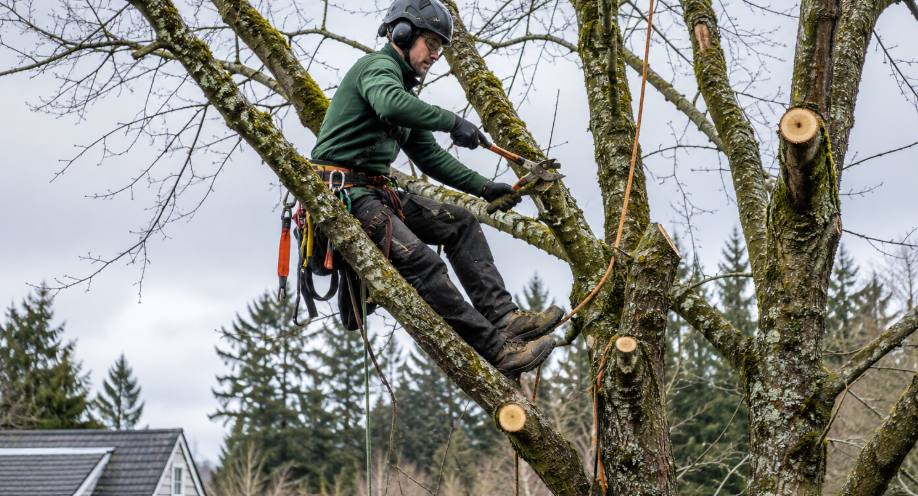
Earthworks Tree Service helps property owners identify hidden tree decay before it becomes a serious hazard. Our ISA-certified arborists can evaluate trees for signs of internal rot, structural weakness, root problems, and storm-related damage.
Frequently Asked Questions About Tree Rot in the Pacific Northwest
Can a tree with rot be saved, or does it always need removal?
It depends on how much of the trunk’s structural wood has been affected and where the decay is located. Some trees with limited or localized decay can be managed with pruning, cabling, or monitoring, while trees with extensive core rot near the base are usually safer to remove.
How can I tell if my tree has rot without cutting into it?
Look for fungal growth, hollow-sounding sections when tapped, bulging or cracked bark, and canopy dieback that doesn’t match an obvious external cause. A professional evaluation can go further using tools such as resistance drilling to assess internal wood condition without significant damage to the tree.
Does rot spread from tree to tree?
Some decay fungi can spread through root contact between neighboring trees or through spores in the air, particularly in stands of the same species growing close together. A rot problem in one tree can therefore be a reason to have nearby trees checked as well.
How often should mature trees be checked for decay?
For trees near structures or high-traffic areas, an inspection every one to two years is a reasonable baseline. More frequent checks may be appropriate for trees that already show early warning signs or have a history of storm damage.
Is tree rot more common in the Pacific Northwest than other regions?
The region’s consistently wet, mild climate creates favorable conditions for wood-decaying fungi to establish and spread compared with many drier or colder climates. This is one reason decay is such a common concern for arborists working throughout Northwest Washington.
Summary Checklist: Could Your Tree Have Hidden Rot?
| Situation | What to Check | What to Do |
| Fungal growth on trunk or base | Presence of wood-decay fungi | Schedule a professional decay assessment |
| Hollow sound when trunk is tapped | Possible internal cavity | Get a resistance drilling or sonic evaluation |
| Canopy dieback with no clear external cause | Internal vascular or root decay | Have an arborist investigate the root cause |
| Old storm damage or improper pruning cuts | Entry points for decay fungi | Monitor closely and consider preventive care |
| Large or older tree near a structure | High-consequence failure location | Prioritize for regular inspection |
Final Advice
Tree rot is one of the hardest hazards to catch without training, precisely because it develops out of sight inside the wood while the tree above ground can look completely healthy. In a climate as consistently wet as Northwest Washington’s, that risk doesn’t simply disappear with time; it can continue to develop. Regular professional inspections, especially for older trees near homes and high-traffic areas, are one of the most practical ways to identify decay before it turns into a sudden failure.
Earthworks Tree Service brings 25 years of experience and ISA-certified arborists to evaluations across Bellingham, Mount Vernon, and surrounding Whatcom and Skagit County communities. We offer consultation, permitting, and reporting services to help property owners understand what’s happening inside a tree before deciding on next steps.
Reviewed by a Certified Arborist
This article has been reviewed by a certified arborist to help ensure the information is accurate and consistent with current professional tree decay assessment and risk evaluation guidelines.