
August 5, 2026
Key Takeaways
- Wind sail reduction lowers the amount of wind resistance a tree canopy creates.
- Selective pruning can reduce storm damage without removing more of the tree than necessary.
- The best pruning focuses on structure, balance, deadwood removal, and canopy thinning.
- Trees with too much top weight or too dense a canopy are more likely to fail in heavy wind.
- Earthworks Tree Service offers wind sail pruning, crown reduction, and storm-prep tree care throughout Bellingham and Mount Vernon.
Pacific Northwest storms are hard on trees. Strong winds, wet soil, and heavy rain can all make even a healthy tree more vulnerable than it seems on a calm day. That is why arborists use wind sail reduction to help trees move more safely in storms instead of acting like giant umbrellas catching every gust.
Wind sail reduction is not about hacking a tree back or stripping away unnecessary growth. It is a targeted pruning approach that reduces drag, improves wind penetration, and lowers the risk of branch or trunk failure. In a place like Western Washington, where storms arrive with little warning and trees are often tall and dense, this kind of preventive care can make a major difference.
What Wind Sail Means
A tree’s canopy creates resistance when wind moves through it. The larger, denser, and more unbalanced the canopy, the more force the wind can push against the tree. That resistance is often called wind sail because the crown can behave a lot like a sail on a boat.
When a canopy catches too much wind, the trunk and roots absorb more stress. If the soil is saturated, which is common in the Pacific Northwest, the anchoring system may be weaker than usual. Wind sail reduction helps reduce that pressure before a storm exposes the weak points.
5 Ways Arborists Reduce Wind Sail to Prepare Trees for Pacific Northwest Storms
Arborists do not simply cut off the top of the tree and call it storm-prepared. The goal is to preserve tree health while reducing drag in a way that still supports strong structure and natural growth. That usually means selective pruning, removing deadwood, reducing long end-weighted limbs, and improving the tree’s overall balance.
Western Washington’s weather creates a unique mix of tree stressors. Long periods of rain soften the ground, and then windstorms arrive and put extra pressure on roots and trunks. A tree that might be stable in dry soil can become much more vulnerable once the ground is saturated. Dense native growth and mature landscape trees also tend to develop large canopies over time. Without regular pruning, the top of the tree can become heavy and broad, which makes it more likely to sway or break in wind. Wind sail reduction helps prepare the tree before the storm season does the pruning for you.
1. Selective Thinning Improves Wind Flow
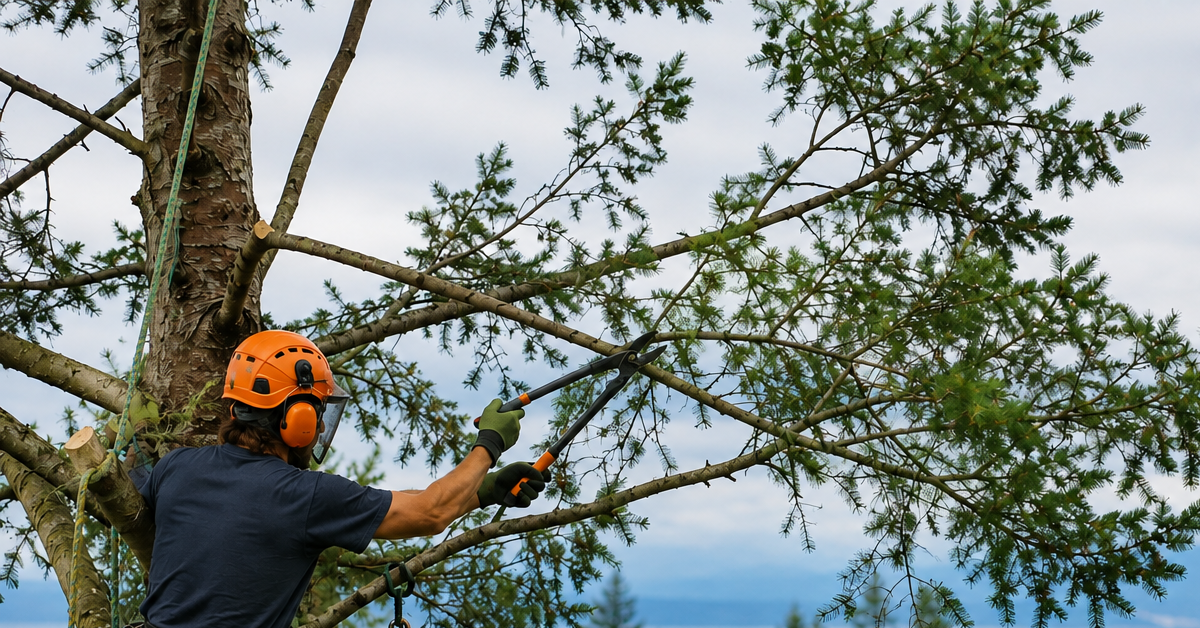
One of the main strategies in wind sail reduction is thinning the canopy. By removing selected branches, the arborist creates openings that let wind pass through rather than slam into the full surface of the crown. That lowers pressure on both the canopy and the trunk. This is not the same as making the tree bare. Good thinning keeps the canopy balanced and natural-looking while reducing resistance where it matters most. A skilled arborist looks for branches that are crowding the interior or contributing to excessive sail area without adding structural value.
2. Crown Reduction Lowers Top Weight
Trees with too much weight at the top are more likely to fail when wind pushes against them. Crown reduction shortens selected limbs and reduces leverage at the ends of branches, which helps the tree move more safely. This can be especially helpful on tall trees near homes, roads, or power lines. When top weight is reduced, the tree is less likely to sway violently in a storm. It is a practical way to lower risk without removing the tree entirely. Earthworks also offers electrical line clearance certified services, which is important when tall trees are growing near utility infrastructure.
3. Deadwood and Weak Limbs Come Out First
Before any wind sail reduction work is done, arborists remove dead or broken branches. Those limbs do not contribute to tree strength and can become dangerous projectiles in high wind. Weak attachments, cracked limbs, and hanging branches are also high priorities.
Removing deadwood does more than reduce storm risk. It also improves the tree’s appearance and helps the arborist see the true structure of the canopy. Once the obvious hazards are gone, pruning can focus on improving balance and reducing the canopy’s overall sail effect.
4. Balance Matters More Than Heavy Cutting
A tree can be made less safe if pruning is uneven or too aggressive. If one side is reduced too much and the other side is left heavy, the tree may become more unstable rather than less. That is why wind sail reduction has to be done with structure in mind.The goal is to reduce drag while preserving symmetry, branch spacing, and the tree’s natural weight distribution. A well-pruned tree should still look like a tree, not a topped or misshapen shell. An ISA-certified tree service firm in Bellingham, WA is trained to make these judgment calls carefully.
5. Cabling and Bracing Can Add Support
Some trees are worth preserving but need extra structural help. In those cases, cabling and bracing can reduce the chance that weak limbs or multiple stems fail during wind events. This is especially useful for trees with historic value, high property value, or strong sentimental importance. Cabling and bracing do not replace pruning, but they can work alongside it. Together, they help lower storm risk while keeping a tree in place when removal is not the preferred answer.
When to Schedule Work
The best time to prepare trees for Pacific Northwest storms is before the weather turns rough. Late summer and early fall are often smart planning windows because crews can evaluate the canopy before wind and rain season intensify. That gives homeowners time to address hazards while access is easier and emergency demand is lower. However, a hazardous tree should not wait for the “right” season. If a tree already shows cracks, deadwood, or instability, it should be inspected right away.
Wind sail reduction is a specialized pruning technique that helps trees withstand the Pacific Northwest’s heavy rain and strong winds by reducing canopy resistance while preserving the tree’s natural structure. Because improper pruning can weaken a tree or create new hazards, the work should always be performed by trained professionals. Earthworks Tree Service has ISA-certified arborists on staff and is TCIA accredited, locally owned, licensed, bonded, and insured. Our team helps homeowners prepare their trees for storm season through safe, science-based pruning practices. Earthworks Tree Service serves Bellingham, Mount Vernon, La Conner, Rockport, Anacortes, and Skagit County, and surrounding communities. Call our team at (360) 994-1211 to Book Your Free Estimate !!
Frequently Asked Questions About Wind Sail Reduction by Homeowners in Bellingham, WA
What is wind sail reduction?
It is a pruning approach that reduces the amount of wind resistance a tree canopy creates during storms.
Is wind sail reduction the same as topping a tree?
No. Proper wind sail reduction is selective and structural, while topping is harmful and removes too much healthy growth.
Which trees benefit most from wind sail pruning?
Tall, dense, or top-heavy trees near homes, driveways, power lines, or exposed areas often benefit the most.
Can every tree be reduced for storm prep?
Not always. The tree species, health, structure, and location all affect the best treatment.
How often should a tree be checked before storm season?
Trees near structures or in exposed areas should be assessed regularly, especially if they are large or already stressed.
Summary Checklist: Managing Tree Wind Sail and Storm Vulnerability
| Tree Condition | Wind Sail Concern | Recommended Response |
| Dense Canopy with Little Airflow | High Drag During Storms | Selective Crown Thinning |
| Tall Tree with Heavy Top Growth | Strong Leverage in High Winds | Crown Reduction and Structural Balancing |
| Dead or Hanging Branches | High Branch Failure Risk | Remove Deadwood Before Storm Season |
| Weak Branch Attachments | Limb Breakage Under Wind Pressure | Structural Pruning or Supplemental Support |
| Important Tree with Visible Weakness | Potential Storm Failure | Install Cabling, Bracing, and Perform Corrective Pruning |
| Tree Near Power Lines or Structures | Increased Property Damage Risk | Certified Clearance and Risk-Based Pruning |
Final Advice
Wind sail reduction is one of the smartest ways to prepare trees for Pacific Northwest storms without removing them unnecessarily. By reducing drag, removing deadwood, and improving structure, an arborist can help a tree stand up better to wind and wet weather. It is preventive care that protects both the tree and the property around it.
If a tree on your property catches too much wind or looks structurally weak, a certified arborist can help you address it before the next major storm. To learn more about how Earthworks Tree Service can help you, call our team at (360) 994-1211 to Book Your Free Estimate !!